
Chapter Text
Alexander Lightwood slips his key card onto its holder and watches as the lights activate within his hotel room. With a tired sigh, he throws his duffel onto the floor, haphazardly kicks off his runners, and collapses onto the bed face first.
He contemplates the idea of never peeling himself off his proned position, but begrudgingly reminds himself that he’s spent hours in an airport, and equally so in an airplane from New York to Toronto. He feels gross, and he is gross. Not showering would be completely irresponsible.
Before he can even push himself off his bed, his phone rings in his pocket.
Alec digs for the device, flips onto his back, and swipes at the screen.
“Hey. Any news?” he asks, stomach sinking, nerves fraying.
Helen’s voice on the other side of the line is already feels apologetic even before he hears the first word. Sorry, Alec. It’s a pass on Lionsgate.
Alec stifles the disappointed sigh from his lips. Instead, he passes a hand over his face, fingers pressing frustratedly onto the inner corners of his eyes. “Okay.”
You alright?
Alec breathes out, propping himself up into a seated position. “Yeah. So that leaves us with what? Chestnut Ridge?”
That and Imagine.
Alec’s fingers settle at the bow of his lips, eyes lost. Chestnut Ridge Productions, maybe. Paula Wagner has taken on some out-of-the-box screenplays before. But Imagine Entertainment has very specific type of film they choose to produce; top-bill, big blockbuster movies—The Da Vinci Code, or A Beautiful Mind, very Ron Howard in the weight of it all—which means not so Alec Lightwood. The distance between his directorial style and Ron Howard’s is just about the distance between the east and west coast. Holga doesn’t align with a lot of the other films already made, no topple-the-patriarchy post-modern silent film does. Makes it a bitch to pitch to producers, unfortunately.
Alec?
Alec blinks, back to reality. “I gotta go, TIFF’s in a few hours.” He straightens his back, “Thanks for the update.”
No problem. There’s a pause on the line, like a thought is being mulled over. This is one of the best screenplays I’ve read in a long time. I want you to know that. We’ll find someone, Alec.
Alec softens at the words, and it makes him cast a small smile onto the palm of his hand. “Thanks.”
I’ll see you when you get back to New York.
Alec tosses his phone onto his mattress and wallows momentarily within the silence his room provides. He lets the news roll onto him like waves, tries to work through what it means to have yet another studio turn down his prospective film. It’s been six months since the controversy that was his last movie’s cancellation, right in the middle of principal photography, and the media outlets had consumed the information like lions onto a dead gazelle. In every interview, Alec has faced the same tiring question—how does a film helmed by an Academy-winning director, made under a production company as big as Miramax, starring some of Hollywood’s biggest names, so thoroughly fall through the cracks? The question is exhausting, the same one every goddamn time, but formulating an answer that is meant to cushion the truth is even more so. Alec knows exactly why it happened, and the thought of it boils his blood like no other. The only thing stopping him from furiously answering with truth is the legalities of the contract Miramax will no doubt use against him like a loaded gun.
Alec, playing nice doesn’t automatically mean selling out. Jace’s voice in his head almost sound hyperrealistic, like he’s standing right next to him. And he knows what he would say next too, all words he’s heard before in a tone partly annoyed but mostly impressed. You’re a stubborn piece of shit, Lightwood. It’s both your damning and redeeming quality.
Alec looks at his phone and checks the time.
He sheds the clothes off his back, turns the shower on, and mentally goes through the list of Canadian producers he needs to catch tonight in hopes of selling a pitch.
He prays to the universe that his stubbornness gets him somewhere tonight.
It doesn’t.
“Okay, cut!”
Alexander Lightwood pops one side of his head set from an ear, and he can’t help the dullness in his voice. “Take five.”
The meticulously arranged symphony before him cleanly breaks apart. Actors release their characters momentarily the same way Michael lowers the boom he’s held precisely out of frame for the past fifteen minutes. Lisa and Mario, both operating separate cameras, revert back to their marks, exchanging a few words to each other under their breaths as hair and makeup enters the space, carefully fixing anything that seems to be misplaced.
On better days, Alec usually appreciates the well-oiled machine that is his crew in small moments like these. He peels back his head set completely, settles elbows onto his knees, and watches as a replay of the scene on his monitors. He barely registers the frown on his face until Maia, his cinematographer, claps a heavy hand on his shoulder.
“Doesn’t feel right.” Alec mutters, brows creased.
“What doesn’t?” Maia replies with an edge to her tone, “The scene composition? Or the fact that the higher ups want us to turn probably the best script I’ve read in a long time into a trash romcom?”
Alec sighs, passing a hand over his face. “You don’t need to remind me. I already am reminded every passing second that we’re shooting this damn thing.”
“They all feel it, you know.” Maia mutters, looking out at the crew assembled before them, a barn in upstate New York their backdrop, “It’s not the same project they signed up for, not anymore.”
The thought of it makes Alec anxiously press fingers against the bulk of flesh by his thumb, up to the point of abuse. He knows instinctively well how the general mood of their production has taken a sharp turn down to the negatives. The day their executive producer arrived on set was the day they knew this film is going to be chucked into the wood chipper and spit out mangled. Nothing good ever happens during a surprise visit by the person in charge of the salary of every soul in the room. Everybody’s concern wasn’t unfounded—Valentine Morgenstern has taken the time off his unbelievably busy schedule (his words) to tell Alec that the initial viewing of the scenes they’ve so far shot has concerned the investors. That it might be too ‘niche’ to ever turn up the crowds they need to break even. That it has little viability on the market. Valentine hands him a revised script going forward, even before he can open his mouth to say no.
“Are you gonna step up?” Maia asks, “Where’s that patented Alec Lightwood fight I’m always at the receiving end of?” Their little harmless arguments from the small things like what deli meat is better to the big things like the cinematic tone of a scene is a main staple of entertainment for the cast and crew.
Alec rolls his eyes. “There’s none left. The fact that I’m directing a glorified Hallmark Christmas movie is proof of that.”
Maia takes a seat on the stool right next to him. “This is shit film school didn’t teach us, Lightwood.” she morosely says, “You can have the best education in the world, intern with top-bill film crews, but the one thing that will always be is that money matters.”
“Very rarely does this business have good Samaritans willing to give us money to exercise our artistic visions.” Maia chuckles under her breath, “If it did, half of the Fast and Furious franchise wouldn’t have seen the light of day, and we’d still be making the same beautiful film you pitched to the board of directors once upon a time. Instead of this—what’d you call it?”
Alec help but quirk a smile. “Glorified Hallmark Christmas movie.”
Maia leans forward. “Doesn’t mean you give up the fight. They all believe in you, Alec. You’re the only reason why they’re still pushing through despite the bullshit politics of it all.”
Alec purses his lips. It’s definitely not too late to revert back. The script has been redistributed but none of the new scenes have been shot, and the ones the executives wanted redone they’ve been sitting on stubbornly for the past week. Maia watches the cogs of Alec’s brain turn like they’ve never turned before.
“What you need?” She says.
Alec breathes. “I need the telephoto lens back on the cameras, and I need that lighting fixed at the far end over there. And I need everybody back in position.” He hops off his chair and onto his feet, clapping his hands to catch everybody’s attention.
“Excuse me, I’d like to get everyone’s attention please.” Alec calls out, and everything stills in his wake, “Valentine can go fuck himself. We’re going back to the old script.”
A tumultuous applause breaks, and Alec can’t help but grin as he places his head phones back onto his ears.
He feels something great on the horizon.
One thing that I could surely say about Alec Lightwood even before meeting him is that he is extremely punctual. By the time I arrive at the unusually empty Birch Coffee by Flatiron, the acclaimed director is already sitting at a secluded corner by the back, nursing a cup of black coffee. He smiles up from the phone that is lighting up in a rate that is dizzying to a normal person, and apologizes for being so preoccupied and not noticing my arrival. I ask him if he usually comes to set as early as he comes to meetings, a good twenty minutes before the agreed upon time, and he nods a slightly sheepish yes. He explains how punctuality was something he had gleaned from his childhood upbringing, and how it had morphed into somewhat of a fear for him as an adult. “I just don’t like being late, no matter the occasion. Kind of sets up a preconceived notion of who you are as person even before you get to show it.”
Alec Lightwood had become much of a myth within the filmmaking industry. Plucked out of NYU Tisch School of Arts, he is wildly regarded as a prodigy filmmaker after his first amateur directorial effort of a short film, Seventy Years, was selected as one of the official entries for the Cannes Film Festival. Seventy Years was supposed to be a mere senior thesis project, never meant to take off as much as it did. But a professor urged Lightwood to submit his to work to the Cinéfondation Awards, which is the student film category of the festival. Lightwood ended up winning first place. Seventy Years went on to be a part of countless film festivals locally and internationally from then on.
Variety: Can you tell us how your love for film came about?
Alec Lightwood: My mother is an avid fan of the filmmaking process. She’s a cinematographer, and before that she did a lot of grunt work; boom operator, gaffer, focus puller, runner, you name it, she’s done it all. She would play her favourite films in the background while she worked around the house, and by the time I was twelve years old I could recite dialogue off Singing in the Rain by memory. She also brought me and my sister to the films she’s a part of, really exposed us to the ins and outs of it at an early age.
Variety: Your sister Isabelle became an actress while you became a director. I’m sure this a common thing you hear, but there’s many out there who wouldn’t be opposed to seeing you in front of the camera instead of behind it. What made you want to be behind the scenes?
AL: I’m flattered, thank you. But it’s always have been the artistic vision for me. There’s nothing like having the picture of a story in your head, imagining it so vividly that a movie flashes in your mind’s eye, and then translating it to reality. That orchestration of all the moving parts to produce a cohesive, beautiful sound is what confounds, frustrates, and interests me all at the same time. Behind the camera is where I can find it, so behind the camera I’ll stay.
Variety: So no chance of adding ‘actor’ under your resume?
AL: [laughs] No, I don’t think so. I would make a terrible actor.
Variety: Tisch has been very vocal about their pride of your work, naming you as one of their most notable and accomplished alums.
AL: Which, can I just say, is absolutely ridiculous. They’re putting me up there alongside Martin Scorsese, Spike Lee, and Ang Lee, that in itself should be illegal. I’m literally dirt under their shoes.
Variety: You diminish your achievements far too much, Mr. Lightwood.
AL: Yeah, I suppose I do. I might even sound a bit ungrateful. But there’s just no negotiation. I would never in my entire life put myself on equal footing as those directors. I’m just a brat with a pretty decent imagination.
Alec Lightwood may be a self-proclaimed brat with a pretty decent imagination, but his accolades do not lie. After the critical success of his first movie, he went on to intern for Warner Brothers, and by chance meets Damien Chazelle, another director beloved by the critics for his works like Whiplash and Lalaland, who takes him under his tutelage. When asked about his mentor, the light in Alec’s eyes intensifies.
Variety: What was it like to work with Damien Chazelle?
AL: I still can’t believe everything in the universe lined up in a way that I was able to meet him, let alone be mentored by him. He is truly just an exquisite story teller, and even meeting him the first time—it was at the LA Indie Film Fest, he came around and watched a couple of the entries, one of which was mine—you could literally feel how his brain worked. He always has this urge to tell heroic, near mythologic stories of dreams achieved, but stripping them bare of all the golden trappings to show the blood and muck that exists underneath. Whiplash is one my most favorite modern films and the high and low of the energy from scene to scene just plays with you. You go from a kinetic, high-pressure atmosphere of Andrew drumming and being pushed to sheer agony by Terrence and then suddenly it just drops—it’s a comfortable family dinner, and suddenly you can breathe again. That kind of approach, one that is so visceral and emotionally jarring like you can physically choke the air out of the audience just by what they see on screen, is really the biggest thing I’ve learned from Damien. Our story telling might differ incredibly, but it all stems from one goal. [laughs] If I sound like a crazed fan, it’s because I am.
Chazelle seems to be equally in awe of Lightwood’s directorial talents, as he helped the latter pitch an extended version of “Seventy Years” to be made into a full, feature length film, which expectedly does critically well. “Sequoia” and “Five Wildfires”, his next two films with him fully at the helm, garner attention from the Academy and the latter gets nominated for a few categories, namely Best Original Screenplay, Best Director, and Best Original Music Score. His first win comes at the heels of his 29th birthday for his latest film “Friendly Universes”, making him the youngest recipient of the Academy Award for Best Director, a feat previously achieved by his own mentor.
Variety: How does it feel to be the youngest recipient of the Academy Award for Best Director?
AL: Whenever I think about it, part of me is reminded of the work that has been done to get to point of even being nominated for that category. The cast and the crew really took ownership of this film and grasped the vision of how we all wanted this to look, sound, and feel like. They were in there, knee deep, ready to risk it all. There were many people I’ve said no to, many people I’ve had to go toe-to-toe with for them to keep their corporate hands off the pure thing we were making, and to have that award alongside Best Picture elevated the giant ‘I told you so’ we’ve been chanting back to the executives since we’ve started shooting. Part of me still believe that I don’t quite deserve it, but it’s healthy to have a bit of self-doubt to tether you to the ground.
Variety: What’s down the pipeline for you?
AL: Searching. The right producer, the right company. After Soft Foundations fell through the cracks last year, I’ve become a little more wary. The next one is going to be the done right.
Variety: Thank you for your time, Mr. Lightwood, and good luck with your future endeavors.
AL: Thank you, it was my pleasure.
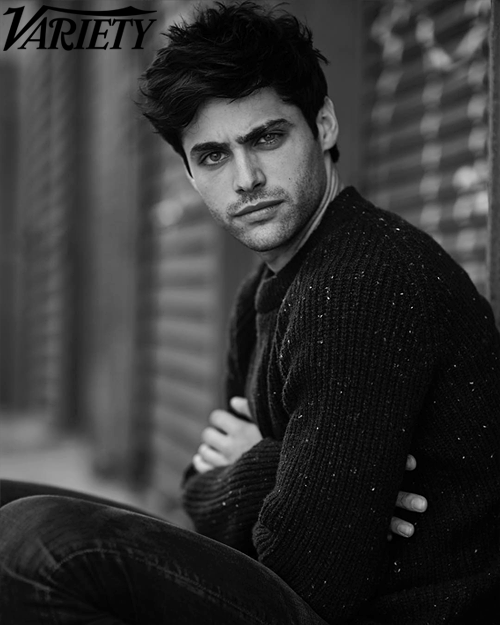
“Decent interview.” Isabelle hums, flipping the magazine shut and placing the magazine back down onto the table with a mild slap.
Alec only shrugs, a pair of sunglasses hiding the expression in his eyes. He takes another monstrous gulp of is coffee and fiddles with the bulk of his thumb, the ankle propped onto his knee jiggling anxiously.
“Alec.” Isabelle says, rolling her eyes. “Stop it. It’s going to be fine.”
“Will it, Izzy?” Alec retorts, the edge on his voice unmistakable, “It’s been a year since I’ve lifted a script off the ground, and nobody seems to be willing to budge for me.”
Izzy leans back onto her seat, mimosa in hand. “Guillermo del Toro had to wait three years after Mimic to get The Devil’s Backbone and Blade 2 back to back. If he can wait it out, so can you.”
Alec presses his lips together, unable to find the will to argue. He flips his phone to expose the screen, takes a quick peek, and flips it back when he doesn’t find the notification he’s been waiting for.
“It’s Valentine, I swear.” Alec says under his breath, muted anger palpable, “That son of a bitch black listed me when I refused to let him fuck around with Soft Foundations.” His eyes soften at the memory of it, the sound of everybody cheering Valentine go fuck yourself siphoning a small smile off his mouth. Even Jessica Chastain measuring up to the executives of Miramax couldn’t save the movie from cancellation.
“You did what you needed to do with that film.” Isabelle answers softly, “And I would have done the same. If we bent over backwards every time executives threaten us with axing our projects, what does it say about our integrity in telling stories?”
Alec looks at Isabelle and finds eyes thrown to a distance, and it’s like he could see the memory curl its way back into her mind. It doesn’t take much for him to unravel what suddenly preoccupies her thoughts. There’s a reason why she’s chosen to return to New York City for the time being when her employment base as an actress is clearly Los Angeles. The headlines of a week ago remains imprinted on Alec’s mind: Isabelle Lightwood booted out of recent project after scathing remarks on Woody Allen. Alec has never been prouder. He has a clipping from the very magazine pinned on his bedroom wall.
Two Lightwoods, too stubborn for their own good, too strong to ever hold back, blacklisted in Hollywood.
Maryse would be half proud, half rolling her eyes.
He takes another peek at his phone. Nothing.
“When did they say they were gonna get back to you?” Isabelle asks.
Alec cringes. “Tomorrow.”
Isabelle throws a hand in the air, eyes wide in annoyance. “Then why the fuck are you checking your phone every other second?”
“I can’t help it.” Alec mutters, head lolling back, brow creased in frustration, “Fuck, I’m going to lose my fucking mind.”
Isabelle grins, downing the rest of her mimosa. “That I can help you with, brother. Let’s go out tonight.” She pauses, “Also, I’m pretty sure the person who interviewed you was very much flirting with you.”
“Shut it.” Alec mumbles, his cup halfway to his lips.
Isabelle grins, flips open the magazine again, squinting at the text. “There’s many out there who wouldn’t be opposed to seeing you in front of the camera instead of behind it.” She looks up at him, eyes dancing, very impressed. “Guy came in there ready to shoot his shot.”
Alec rolls his eyes from behind his sunglasses.
Isabelle leans forward, the grin on her red lips refusing to lift. “Was he cute?”
Alec may be grumpy, but he’s not a liar. “I guess.”
“Too late to ask him out tonight?” she asks, and the look on her face shows she’s enjoying this way too much.
Alec frowns, fingers fiddle at the handle of his cup. “I don’t like mixing business with pleasure.”
“Oh, come on, Alec, let’s be real.” Isabelle laughs, “You’ve never been anything but business. When was the last time you’ve had an intimate relationship? Jesus, a vacation?”
It elicits a cringe from Alec when he realizes it’s been too, too long for either one of those things. He’s never crossed state lines for any kind of sabbatical, nor has he been anywhere outside the US for anything other than the filmmaking process. He winces visibly at the next thought that plagues his mind, one that he realizes he hasn’t actually entertained for far too long. When was the last time he’s had just a good, simple fuck?
Mid-life crisis has come way too early for Alec Lightwood.
“Oh, Alec,” Isabelle sighs, chin settled on a hand, “You definitely need this more than I do.”
For once, Alec doesn’t argue.
Instead he says, “Paul’s at 10?”
Isabelle grins again. “It’s like you read my mind.”
Iceland comes to Alec like a fever dream that won’t let go.
It’s during his sophomore year at Tisch when he discovers the staggering film collection archived within the walls of the NYU’s Elmer Holmes Bobst Library. It is as if a hundred doors had been thrown open for Alec the moment he steps among the rows and rows of shelved films in formats that is as old as VHS tapes and as new as Blu-Ray. An online search of the Avery Fisher Center would show an equally extensive collection of digitally accessible media. It is during a search for a specific John Ford film he needed for the completion of an essay that he stumbles across Children of Nature by Fridrik Thór Fridriksson.
The DVD cannister has been misplaced by someone else and is left sitting on top of the row of John Ford films stacked against each other. It is the first time Alec has ever laid eyes on a little sliver of what Iceland is; right on the back cover is a pristine stream surrounded by grass so green you could almost feel it take sunlight and give back air. An old man with a newspaper boy hat kneels over the water, drinking within cupped hands. An old woman standing by an old-timey vehicle at a distance, waiting for her partner to finish so they can continue on with their drive. Alec abandons John Ford for the day and watches the movie he finds instead. It’s a story of two elderly people, societally defined so heavily by their number of years lived, trying to find the things they want and the things they need. Not confused, not senile—just searching. By the time Alec finishes the film, it has wedged itself snuggly into his heart with no motivation to ever leave. Children of Nature pushes him through film school, forms the foundation of his filmmaking, and hovers over his shoulder, whispering in hushed tones as he creates Seventy Years. It’s the film he would go on to credit when he receives his first win as Best Director at the Academy Awards.
Since then, Iceland has always been the place he’s always wish he could see with his own eyes. A notebook from his early years at Tisch is filled to the brim with to-do lists and notable spots and potential budgets that would allow a broke film student like himself to visit such a place. Iceland being expensive is not a secret, but the problem has always been the money. It’s money for a long, long time, until it’s not; until it’s the break-neck speed of how he’s been flung from an amateur filmmaker just trying to find a job to a professional director making movie after movie after movie with no space to breathe in between. For a while there he wades through the business of it all thinking he’s still under control—meetings with executives, premieres, red carpets, after parties, crowds and crowds of people he’s supposed to mingle with but knows not the names of—going deeper and deeper until something collapses underneath and then suddenly he’s drowning.
He would still be drowning if not for Jace and Isabelle pulling him back onto shore, sputtering and coughing seawater from his lungs.
Since then, he’s been more wary of bodies of water.
Despite everything, he works, continuously, steadily, just enough to make the films he wants to make, but not too much that it submerges him again. It simultaneously opens and closes many doors for him, and that those that are swung wide open aren’t necessarily the ones that matters most. Alec knows this, and truly tries, or tries to try.
Sometimes, he still pulls the leather-bound notebook out of his shelf, alongside his copy of a tattered, dog-eared Iceland guidebook he’s read many times.
And every time he does, he tells himself: maybe next time.
Paul’s is what you would get if you took you grandmother’s flower-patterned living room with the wing-back chairs and the vintage lampshades and mashed it with sprawling graffiti and a whole cabinet-full of all the liquor you’d hope to consume in your entire life. The first time Alec steps inside this establishment he feels like his brain is going to turn into mush, but as much as it is eclectic, it is quite private. After all, the Sevignys want discretion as much as any other celebrity does.
Not that Alec considers himself a celebrity. Isabelle, however, is on a tier definitely more elevated than his. She need only nod at the bouncer by the lounge’s entrance, and one of the most exclusive doors in all of New York swings open for them to walk through. Almost immediately she gets crowded with friends and introduced to acquaintances, eager to mingle with one of New York’s best exports to Hollywood since Sarah Michelle Gellar. Alec smiles at the crowd that forms around his sister, a fuck Woody Allen ringing over the pulse of the music around them which elicits a loud cheer from the room. Isabelle laughs openly, eyes perfect crescent moons of glee, but there’s no mistaking the glassiness in her eyes. She hides it well with sheer stubbornness, but Isabelle is still Isabelle—empathetic, soft. Alec motions to the bar when she catches his eyes, and they nod in understanding. They always meet back up at around midnight to see if they have more energy to go deeper into the morning.
Alec ventures off deeper into the crowd, eyes adjusting as it cycles from the darkness of the room to flashes of strobe lights hitting his line of sight. He targets the flamingo-pink bar by the other end, and when he gets there, he settles onto the one remaining empty stool.
“Alec, long time no see.” the bartender says, and Alec smiles in return.
“I know, I know, I’m a workaholic.” He says, waving a hand.
Albert raises both hands in the air, laughing. “Your words, not mine. The usual?”
“Yeah.” Alec nods, and immediately Albert reaches for the bourbon and a bottle of bitters.
“So what pushed Alec Lightwood, prodigy filmmaker extraordinaire from actually leaving the editing room today?” Albert laughs, a paring knife and a lemon in hand, “Soul searching?”
Alec snorts, taking the drink that is pushed towards his direction, “God no. You’d be lucky to hear yourself think in this place.”
“To get lucky then?” Albert says nonchalantly, and it doesn’t even remotely surprise Alec. He’s known Albert for a quite a while, and being probably the oldest working bartender in New York means he has no time to beat around the bush. Alec idly wonders mid-sip if he could ever rock greying hair the way Albert does.
“I don’t know.” Alec says with no gusto behind his words at all, and it’s Albert’s turn to snort.
“God, good-looking people are so annoying.”
Alec chokes on his drink. “Where the hell did that come from?”
“Jesus, Alec, have some damn interest!” Albert urges, a hand gesturing in the air, “You may have an Oscar, and you may have a face that’s easy on the eyes, but you’re also just another single thirty something wanting to find someone to go home with.”
“Twenty-something.” Alec says seriously.
“Dear, you can’t call yourself ‘twenty-something’ anymore when you’re about to turn thirty.”
“Fine, fine, jesus Albert!” Alec says, eyes wide, “If I wanted to get roasted tonight I would’ve gone to the comedy club across the street.”
Albert leans onto the bar counter with an elbow, “Now, if you look to your left, you’ll find a perfectly good-looking man who’s been trying to catch your eye the moment you got here.”
Alec diverts his gaze and sees who Albert is talking about, nice smile, friendly eyes, sweeping black hair, nursing a tumbler of something all alone. He works the inside of his bottom lip between his teeth. “What’s he drinking?”
“Moscow mule.”
“Send another one from me.” Alec mutters, taking another sip of his drink for extra measure.
Albert grins, already half-way done. “Atta boy.”
“Is it any good?”
Alec tries not to wince. Could’ve been better, but not completely inadequate of a conversation starter, all things considered. It’s been a while since he’s made the first move, and he realizes just how annoying it is that Albert always tend to be right.
The man with nice eyes smiles, body opening up towards him as he adjusts in his seat to face him. He’s dressed simply, no designer prints on his clothes, no thousand-dollar watch circling his wrist, just a nicely tailored shirt and pants that fit right. Alec feels refreshed just looking at him.
“It’s alright.” He says, eyes bright, “Is any type of alcoholic drink actually delicious?”
The commentary actually elicits a true laugh from Alec. “No, I suppose not. I guess it’s the same for coffee.”
“Now you’ve just crossed the line.” Nice eyes tries to say seriously, but the teasing gleam in the way he looks at Alec expresses otherwise.
Alec chuckles, another true one. “I definitely didn’t expect to be defending my stance on caffeine tonight.”
Nice eyes smiles, head slanted to the side, curiously staring. “What did you expect?”
Alec diverts his eyes onto his glass, fingernails tapping at the surface. “A decent conversation, maybe?”
“If you really mean that,” Nice eyes says, an unusually soft, unpretentious smile on his mouth that Alec hasn’t seen in a long time, “And you must tell me if you don’t, I won’t be offended if you’d rather find company elsewhere—I know a good spot for decent conversations.”
Alec looks, really looks at who he’s talking to, tries to peel back the soft smiles and disarming eyes in search for anything remotely disingenuous. Any small sign of dishonesty, because Alec has had his fair share of people trying to use him for their own personal designs—but comes back empty handed.
“Don’t feel obliged.” He says, smiling, “You’re always free to go.”
Alec can’t help it. He grins. “I don’t go wandering around with strangers. So, let me fix that.” He extends a hand. “Alexander.”
Nice eyes laughs, his handshake a firm grasp. “Magnus.”
“Magnus.” Alec repeats, the sound of it foreign on his tongue, but it feels nice.
“Lead the way.”
It takes both of them to prop open the unusually heavy door with a small block of wood they’ve found off to the side, but they achieve what they need to do. Alec breathes out, straightening himself up as he does, and takes in the view of Tribeca afforded to them by this little balcony jutting out of the same building Paul’s is built upon.
Alec plants his hands upon the railings, looking out at the rows of brownstone before them, the famous Manhattan skyline their brightly lit backdrop. Magnus settles to the spot beside him, a respectable distance, and Alec finds it somewhat endearing.
“How’d you know about this place?” Alec says, almost breathless, “I’ve been to Paul’s so many times and I never knew this existed.”
“I did the geological survey of this area before this building was built from the ground up.” Magnus answers, eyes thrown far away, “The engineer who helmed this project is a close friend.” He looks at Alec, smiling, “He shared some little secrets here and there.”
Alec turns fully towards Magnus, elbow leaning onto the railing, eyes brimming with curiosity. “Geological survey? What is that? Wait, what do you do?”
Magnus laughs at the onslaught of questions, and turns towards Alec as well, inching closer ever so slightly. Alec doesn’t think Magnus even notices the little bit of space he unconsciously decides to eliminate.
“I’m a geologist and an adjunct professor at Columbia.” Magnus answers, “When I’m not preoccupied with either of those, I’m working on my PhD. And a survey is pretty much an investigation of the geology beneath an area in order to produce a geological model.” He grins, “That answer all your questions?”
“Jesus,” Alec says, the next bit complete word vomit, “You’re too cool for me.”
The words make Magnus laugh completely, and seeing his face contort into pure glee elicits an equally true laugh from Alec as well. “Well, if you tell me what you do, I can decide for myself if that’s indeed the case.”
The question makes Alec pause. He opens his mouth. “Struggling filmmaker. Small-time. Just starting out.”
“Sounds as completely breathtaking.” Magnus says, admiration in his eyes, “More so than mine, if anything. All I do is look at rocks.”
Alec shrugs, smiling completely. “Then all I do is point a camera.” He lets a moment pass in silence, a comfortable one unlike any he’s shared with others in the past, before asking, “What’s the greatest thing you’ve ever done as a geologist?”
The light in Magnus’ eyes brightens, like a memory is already being harkened into his mind. “Iceland.” He says, breathless in the way he does, “I went on a five-day trip to Iceland when I was still a student. I knew how geologically important it is, how it literally is the meeting point of two tectonic plates actively spreading apart with every passing moment. Volcanoes simmering ominously side by side with glaciers towering magnificently—I’ve never seen anything like it before.”
“It’s life changing.” He shakes his head, smiling, “I promised myself I would go back. Longer this time.”
Alec pushes aside his own fondness of the country. There’s no need to share is own aspirations of it, because he’d rather gather Magnus’ closer instead; the brightness in his eyes and the longing in his voice. It’s much more beautiful than his.
Alec leans forward. “Have you? Gone back?”
There’s some kind of glint of a whisper of a secret in Magnus’ eyes that Alec can’t quite decipher. “Soon.”
“How about you?” he says, and the glimmer of whatever is there dissipates, “What’s the greatest thing you’ve done as a filmmaker?”
It makes Alec pause momentarily, like it he hasn’t stopped in the last five years to actually ask himself that very question. He embarrassingly has to dig deep, farther back into his bank of memories, past Friendly Universes, past Five Wildfires, past Sequoia and Seventy Years—until he’s met with the image of the very first time he’s held a camera in his tiny hands. “It was this little video I shot of my mom.” Alec says, hands gently gesturing in front of him like he has the same old camera within it, “It was my first camera, those old camcorders you need mini tapes for. I was playing around with it and caught a shot of her gardening by the balcony with the sun like a halo around her sun hat. Singing in the Rain was in the background. She watches it every time she’s reminded of her divorce. And it always makes her forget, even for a while.”
Alec’s lips quirk into a smile, eyes distant, “That’s the greatest thing I’ve done.”
Magnus smiles back, one step forward. “See?” he just about murmurs, “Breathtaking.”
Alec’s heart knocks against his ribs, and any closer Magnus would feel the embarrassingly loud way its shouting do it, kiss him, so he hovers, a breath away. “May I?” he murmurs, and his forthrightness is rewarded by a gentle nod.
“You may.”
Alec closes whatever distance remains between them and presses lips against lips, chaste in its beginnings, until Magnus lets his mouth fall open, mouths softly catching, tongues touching in gentle cycles. Alec’s fingers skim Magnus’ waist, up the plane of the shirt on his chest until his palm rests against the upslope of his neck, gently pressing, as Magnus’ touch grazes his chest. They lose themselves within that stretch of borrowed time, breathless and panting but refusing to disrupt the perfect alignment of their bodies flush against each other. Alec pulls back softly, momentarily, and Magnus gives chase, chuckling under his breath.
“Can I take you out? A proper date.” Alec asks like the breath is knocked clean from his lungs, “Before anything else.”
There’s something in the smile Magnus gives him, and only the thumb that tenderly sweeps over Alec’s cheek makes him momentarily forget. “I can’t.”
Alec sighs, catching Magnus mouth into another kiss which he returns wholeheartedly. Alec’s fingers splay themselves against the short buzz of hair at the base of Magnus’ neck. “You can’t or you won’t? Be honest.”
Magnus’ palm presses intimately against Alec’s cheek, an apologetic caress. “I can’t.” he murmurs, “I leave New York tomorrow. For a long while.”
Alec breathes out, closing his eyes momentarily, disappointment rolling off his shoulders in waves. He holds the hand that touches his cheek and intertwines fingers upon fingers. “That sucks.” He sighs, as he looks into the same nice eyes he had caught from across the bar earlier on that night, “And here I thought I finally found someone I like.”
Magnus tugs Alec into another kiss and Alec takes as much as Magnus gives him, longing, lingering. When they finally part, Magnus smiles up at him and Alec feels like the sun is rising on the horizon. Alec takes Magnus’ hand, deposits a piece of paper in the well of his palm.
“If you find yourself back in New York sooner than expected.” He chuckles under his breath, “I was just going to slip this with the drink I sent you. But the bartender threatened to kick my ass if I didn’t come up and say hi.”
Magnus chuckles. “Albert’s always right.”
Alec laughs back, shaking his head. “I’m beginning to see that now.”
They leave the balcony and head back to Paul’s, and when the hum of loud music fills the air and familiar glare of the strobe lights meets their eyes, the finality of it becomes even clearer.
Magnus gives Alec one last kiss, a parting one on the cheek. He smiles that sunlit smile.
“It was nice meeting you, Alexander.”
Alec presses his lips together, a small smile, but true. “You too, Magnus.”
They walk away.
The next day comes, and Helen calls with words that threatens to wash Alec over like a roaring wave.
Chestnut Ridge and Imagine both said no. I’m sorry, Alec.
It takes everything to stay afloat.
Alec wakes up with the sun splaying warmth against his face.
He grimaces, eyes wincing at the brightness that blinds him momentarily, and pushes himself up to a seated position with an annoyed grunt. He traces the ray of sunshine from the little sliver of space allowed by his drawn curtains. Passing a hand over his face, he makes the decision to start his day.
A quick brush of the teeth and wash of the face straightens him out nicely, his previous annoyance slowly coming off, the tension that knots his shoulders releasing itself. He fiddles with his espresso machine, tamping ground coffee onto the portafilter and attaching it onto its holder. A buzzing sound fills the air as he turns the knob that makes coffee drip steadily into his cup. He doesn’t bother with milk and takes his coffee black like he usually does.
He pads across his flat and looks out the window, idly watching as the everything moves in different directions in the street directly below him. Eight in the morning is already late in New York; there’s already a cacophony of pedestrians pounding the pavement, little food stands selling their wares, taxis blaring their angry horns at whomever they please. Alec usually is a part of this almost orchestral wall of sound.
He’d be awake at five thirty, because that’s the type of person that he is. He goes through the call sheet as he makes himself a cup of coffee, and a shower goes immediately after. By six o’clock he’d be in front of his laptop, checking e-mails and sending ones that need to reach cast and crew before prep starts on set. By six fifteen he needs to be out the door and into a taxi on his way to the staging room. A meeting with the first AD occurs by the time his feet hit the floor. By seven thirty, the conversations that need to be had with the DP regarding the scenes that need to be shot should’ve been had. Eight o’clock is call time, and everything picks up like a train in motion with hair and makeup, wardrobe, and special effects coming together. Eight thirty hits and Alec would be escorting his actors and actresses to set, small talk within the crevices of time available, but mostly running through the scenes and what he expects of them. By nine o’clock Alec would be walking through base camp, making sure every moving part of the giant machine he’s running is where it needs to be. Nine thirty is where Alec will be blocking his actors, and by ten o’clock he would’ve done another check with his AD and DP about scene compositions and everything else that needs to be checked—and then, finally, he settles on his seat behind the monitors.
He gives his cast and crew a true thank you for working on this film today.
He takes a breath for himself—and finally calls action.
Alec almost smiles. Almost.
It’s been six months since he’s exhausted all his options for getting Holga lifted off the ground.
And despite the insanity of the filmmaking process, the nerves you fray like live wire being exposed, the doors in his life that open and the doors that close, Alec loves it. He loves it so much that every breath he’s breathing where he’s not making feels inconsequential.
Wait it out, Alec, Isabelle says one day, The tide will turn.
Waiting is the worst part of it all, Alec thinks.
He brings his cup onto his lips and takes a sip, and he’s reminded again of why he shouldn’t buy coffee beans in bulk. Shitty beans make for shitty coffee.
Now you’ve just crossed the line.
Alec actually, truly smiles for the first time in a while. He’s reminded, softly, of nice eyes and a sunlit smile, and that kiss that could’ve upended his entire universe if he let it. He hasn’t received any messages from Magnus, and the thought of it curls bitterness into the smile on Alec’s lips.
It is what it is, he tells himself. Some people you meet you’re meant to keep, and others you’re meant to forget.
Alec blinks, and turns to the bookshelf that stands by his window.
Setting his coffee cup onto the ledge of his window, he carefully graces a fingertip over the spines of all the books he’s kept for himself, jumping from one title to the other until he feels the familiar leather-bound notebook he’s been trying to find. He tips it back, pulling it out of the assemblage, and feels the weight of it within the palms of his hands. He pulls out his tattered, dog-eared Iceland guidebook, too.
He allows himself a small smile.
Now or never.
In the heart of Reykjavik, Magnus Bane picks off a piece of paper from his bedside drawer, the flamingo-pink of Paul’s logo stamped on the corner.
He smiles.
He slips the piece of paper back into his wallet.
Maybe next time.