Work Text:
Terry said he’d met the guys at a party uptown. Lou wanted to ask which one of them he’d been trying to pick up but he guessed at the last minute that that kind of joke might not land right for the man who signed his paycheck, so he just told him sure. They were all three of them handsome and lithe, wearing wool coats and distinctly wary expressions. Terry said something by way of introduction that Lou mostly elected to ignore.
“Coffee?” he asked the trio, internally congratulating himself on this display of good manners, on seeming like a normal person. Their palpable unease in the studio gave him an unexpected surge of confidence because now he was the man on the inside, the one who knew where things were and how they worked. One of the guys said yes please cheers in a British-leaning lilt. He looked really bohemian, with a goatee and a turtleneck sweater and the long hair that Terry was so keen on.
It wasn’t a proper kitchen, just a sink and a hot plate and a closet that stored, perhaps unwisely, both cleaning supplies and nonperishables. He dumped a couple spoonfuls of chalky coffee grounds into a mug, then turned the faucet handle as far as it would go to the left. The guy’s blunt eyebrows rose curiously as Lou filled the mug with almost-hot water. Maybe they didn’t have instant coffee in England?
There was no milk or sugar to offer so Lou just handed him the coffee without any further ceremony. The guy took a sip. After he swallowed, Lou saw him briefly put the tip of his tongue to the spot on the rim of the mug where it was chipped and the ceramic was raw. His own tongue recalled the sensation, spongy yet inert and shiver-inducing in the wrongness of the textures against one another. A sheen of coffee clung to the hair on the guy’s upper lip.
He played them the songs. They were dumb throwaway things, one dumber than the other, but they’d made him laugh when he first came up with them and they still sort of made him laugh now. You could dance to them without much thought, which is what was important.
The trio made noises of mild approval. The bohemian guy still had that stitch between his brows as he studied Lou’s fingers akimbo on the fretboard.
“How’ve you tuned that?” he asked.
Lou smiled indulgently. He explained how he’d tuned his guitar to one note, creating an uncanny resonance not generally associated with the instrument, affecting the sound of—
“A drone,” said two of the guys simultaneously. They exchanged a look of bemusement and Lou was momentarily caught between disparate feelings of surprise and satisfaction and absurd, intense jealousy of this display of nonverbal communication. He wondered if they were balling each other. Maybe the third one watched while they did it.
They refused to sign any of Terry’s record contracts, which made Lou respect them far more than if they had, but they agreed to come on the tour anyway, laughing a little as they said so. The whole thing was a joke, so why the hell not? Lou couldn’t deny that he’d thought the same.
The guy—John, he’d said—hung back after his buddies had left and then followed him outside at a slight distance, so his footfalls sounded like an echo of Lou’s own boots on the metal staircase. There was a heavy, conspicuous elegance to his appearance, odd and out of place in both this country and this century, like a big old mahogany door set in plaster drywall.
Lou lit a cigarette as he tried to decide how to spend the remainder of the dwindling daylight, whether it was worth it to see if he could get into this guy’s bed and successfully avoid Freeport for another night. Probably that was a conflict of interest now that they were supposed to be working together. On the other hand it could be laying the groundwork for some ongoing entertainment while on said tour, and in that sense it was actually a proactive move—planning ahead!
He threw a glance his way and John averted his gaze. He was skulking in the shadow of the stairwell, his hands jammed under his armpits and his broad shoulders hunched slightly. He was acting like some kid who’d snuck into a fag bar for the first time in his life, squirrelly and uptight, afraid that he’d get caught looking, afraid that he wouldn’t. Lou couldn’t decide whether he found it more irritating or intriguing.
“You want a cigarette or what?”
He stepped forward. “Thanks.”
Lou took the cigarette from his own mouth and handed it to him before lighting another for himself. By the time he looked back up John’s expression had settled but there was a delightful residual unease there, the color in his cheeks which would not have been noticeable if his complexion weren’t so sallow and Lou wasn’t already standing so close.
“So what do you do?”
“Viola.”
He barked out a laugh. “Well, yeah, but—I mean, other than that.”
“Piano, organ, harmonium, celesta, sarinda…” John shrugged. “But I’ll play anything, really.”
“Jesus, man, I get it. You’re a fuckin’ prodigy.” He rubbed his jaw in an effort to massage the excitement from his expression. “Shit. I knew you had an edge on me.” Of course Lou had meant other than music but it appeared that there was very little else that mattered to John. He probably could have gone on forever listing obscure musical instruments. Lou switched tacks. “You ever get high?”
For the first time John offered a real smile and Lou almost wished he hadn’t. It rearranged the geometry of his face entirely. Split it open. He was reminded of breakfast as a little kid, when he and Bunny would tear into the orange slices set out by their mother until just the rind was left, then slip it behind their lips and grin at each other from across the kitchen table.
“Sure,” said John. “Me and this guy, a saxophonist, we used to sniff ether on my roof.”
Then he launched into a story that Lou couldn’t quite parse involving a cat and the manipulation of electrical wiring and the potential it had for blowing the entire block to smithereens. John seemed proud to tell him that at one point he had however inadvertently harnessed the power of electricity in his hands and been briefly capable of great destruction. With his accent and the way he held his words at the front of his mouth, close to his teeth, he sounded like a warlock detailing some kind of dark arts. He might look hip but it was clear that this guy was a complete fucking weirdo.
“D’you have any more of that stuff left at your place?” He allowed the faintest leer to lift the corner of his mouth.
John looked at him. Lou thought he could hear the gears as they whirred and clanked just behind his dark eyes. “Nah, I’m off it. I’ve got other stuff, though. Better.” He paused, considering. A terrific mechanical racket. “Have you got any more songs?”
“Sure I do. Better ones, even.” Unbidden, his smirk gave way to something more sincere.
John smiled back, exhaled a small cloud. “I look forward to hearing them.”
Over time Lou came to realize that John had no real proclivity toward nicotine the way he did practically all other substances, and he would remember that conversation in the cold November sun of Long Island City with something almost like satisfaction because ultimately he hadn’t been wrong about any of it, no matter what John said later. He had been there, too, after all. He’d seen the look on John’s face, the plainly wanting cant of his posture.
He wasn’t crazy. He knew just where he was going. John had told him that.
He had been young when they first met, older by a week and yet young, fragile like something recently born, like something accidentally and inevitably borne: a virus that ran the gamut of your veins, a cough that clung to the walls of your lungs. Familiar ailments, ones that lingered. Wet around the eyes, dark pools reflecting John’s own because he had them too on account of his birth at least according to Lou and also Billy, who knew these things: stars and signs and the shape of the moon. John did not understand or even care until confronted with the films for the first time. Regardless of literal scale Andy had a knack for immensity. John was discomfited by the huge silver liquid gaze of his own eyes on the wall, mercury slipping fully formed and violent from a dropper. Disoriented by the obvious beauty of it which was Andy’s more than it was his own.
He had no interest in getting caught in the sucking maw of memory and yet that was what people would always want from him, described however inadequately. So despite his resistance he knew well the scenes that composed the stories he told and retold, and the stories he kept to himself, and the stories that slipped away:
The first improvisational concert, the moment that a clear path emerged from the panic-stricken fog, sheetless yet sure, the blaze of creation warm through the muscles of his neck and jaw.
The first time he slipped inside a drone and discovered the vast landscape that could be contained within a single note.
The first time he flew in an airplane, acutely aware all the while that there was only a layer of metal and fiberglass separating his body from the wild whistling stratosphere outside.
The first time he stepped into the Factory, surrounded on all sides by silver.
The first time he made a girl come using his mouth, pooling hotly on his tongue.
The first time he did amphetamines, psychedelics, barbiturates, opiates, whatever class of drug he could swallow or smoke or shove up his nose so long as it didn’t involve a needle and then he didn't even mind a needle. The sensation of his central nervous system unhooking itself from his spinal cord and sprawling along strange and uncharted anatomical lines. Time slowing, then surging forth, then skipping like a warped record. Terrible, unthinkable depths of joy—though joy was in fact too flimsy and small a word and all the others were meaningless in their cliché—and with it an even deeper and more terrible hunger.
The first time, amidst the cornflakes and rows of tomatoes which gleamed an unappetizing red under the fluorescent lights, the air shifted as the kids danced, saddle shoes against linoleum, moving their attractively rangy adolescent bodies in time with a sound that he had willed into existence. He continued to relish the fear and disgust above all but for the first time he saw the appeal of dumb pleasure there, too, in between the grocery aisles.
The first time Lou played him those songs which were thin and vivid like him and John did not care for them. Then Lou made him read the lyrics, practically shoved them under his nose, and he was forced to reconsider. On the acoustic guitar in the furnitureless cold they were still sonically emaciated, all skin and teeth. John realized immediately upon hearing them anew that he had to put the blood in, the tendons. Organs…
Lou was singing and then he was saying something about how he'd managed to avoid the draft when he put his hand on John’s thigh. John was still so taken with the songs that all he could really do was cough out a laugh at the brazenness of it. “What are you doing?” he asked.
“What?” Lou shot back, like it was John’s fault. He looked genuinely confused but he didn't move his hand. His fingertips rested lightly on the inseam of John’s jeans where the denim was worn thin.
“Let’s be professional,” he said. Lou had interrupted himself in the middle of singing a phrase and it gnawed at John’s brain to leave the unresolved chord hanging in the air between them. More than anything he wanted to hear the rest of the words.
Lou narrowed his eyes. Then he, too, began to laugh, falling back on the sofa as if knocked down by the force of his own amusement. He flung his arms out to the side. His laughter sounded like galloping through columns of air. Later on the tapes he would find it difficult to tell his own laugh apart from Lou's. “You’re a weird son of a bitch, Cale,” he said.
“Keep playing,” John urged him.
They ran through the shrieking cold across Union Square, buffeted on both sides by a wind whose presence they were aware of but whose chill could not reach them. Lou’s fingers were numb around the six pack they’d agreed was a reasonable offering in exchange for the temporary use of a working television. It wasn’t champagne but they were used to making do.
Inside Danny’s apartment they fell to their knees and huddled around the television set as if for warmth or a campfire story. Their shoulders touching, the undersides of their jaws lit up by the weak colorless light emitted by the screen.
Danny fussed with the rabbit ears and Lou reached out and held his hand in front of the TV, just to feel the staticky heat it gave off, how it raised the dark hair on his knuckles. There was a great deal of fanfare and shouting don’t block the picture Lewis! Cale’s severe profile in momentary focus as Kate tipped baby powder onto the dark curtain of his hair. In black and white the ribbons of paint that snaked over their bare arms and curled around their torsos seemed more like shadows or holes, elongated gaps in their flesh. The newsman said their name and he felt a sudden vacuum of air around him in the absence of music. Then Sterling crowed, triumphant, and the room rang with giddy laughter.
Outside was cheering, too, holiday-standard, but Lou privately folded it into his fantasy of the world being totally and completely on his side for just one night.
The narration cut out and for a second or two it was only them, small and silent and fairly fuzzy but still recognizably themselves. He was not yet used to the image of his own person outside of himself, the back of his own head, angles of his body which he would come to know intimately through other people’s lenses. He recognized the slope of John’s shoulder first. Sterling’s hair the shortest it would be for the next five years. Even Maureen, blinking behind the mask Sterl had picked out for her to wear, and Angus, folded up on the floor. Piero and Barbara and Margaret and Bobby and Adam. Their scene shrunk down to fit within the TV’s frame, pressed up against the glass like it could hardly be contained.
Now the newsman wanted to know why was it that Andy was making these films. Everyone on this side of the screen chuckled. It’s easier than painting, Andy told him. Lou thought he looked handsome if slightly diminished inside the TV, bright-eyed and wry. The bad picture quality smoothed out his complexion. “The camera has a motor in it,” Andy was saying, “you turn it on and just walk away.”
More laughter. Now Edie, and Sterling said something crude under his breath to John, quiet enough that Moe couldn’t hear. Lou glowered until he realized no one else had noticed except for Danny, who squinted at him.
Then back to Walter Kronkite, seemingly unmoved by the display. “And that's the way it is, December 31, 1965…” he intoned. “Goodnight.”
Danny switched the television set off as everyone shrugged their coats back on and the picture collapsed into a narrow keyhole of dull white light. It was only when it ceased that he realized the machine had been giving off a low hum the whole time, and now the room felt as though something had been excised from it.
They ventured against the downstream current of tourists. On the subway Lou watched John watch the tunnel walls rushing past them out the window, his eyes shivering in their sockets as they tracked the movement.
Harlem in the winter could be glorious if you caught it at the right time when the piles of snow were not yet reduced to sooty icebergs. Sidewalks and front stoops spilled over with revelers as their small group hurried from the 125th Street station to the Apollo. Even the broken glass that crunched under their boots looked more like sequins caught in a storm drain.
James Brown was his own source of electricity and everyone in the auditorium strained toward that light. Under a veil of perspiration his skin seemed aglow; Lou thought he could practically see the steam rising off of him. He heaved and jerked as the music moved through him. This was something elemental, beyond language, sound straight to the bloodstream. This was the great and terrifying potential of the human body to move another body. This is what they could have for themselves, he thought, in their own way.
They hadn't even taken anything besides the beer, not wanting to exclude Maureen, and yet there was a distinct fizzing warmth in his brain and all up and down his limbs, and he just let himself feel until he was faint with it.
When the curtains fell for the final time it was a real loss to be mourned. The applause sounded like rain except for the clapping of those standing on either side of him, the staccato slap of their familiar hands. His own wrists ached from the impact, throat sore from cheering.
A sense of gratitude welled up inside of him with the knowledge that they had witnessed something that he could never articulate, that the people whom he would most urgently need to tell required no explanation, anyway, because they had experienced it with him.
The world felt very possible then, bright enough to burn.
The first time he involved a needle he was the table and he was the gleaming axe held aloft in his tender nineteen-year-old hands tacky with recital sweat and he was all of the eyes of the audience members as their expressions pinched and drooped with concern. This was a kind of conducting, wasn’t it, the way a field full of lightning rods in a thunderstorm was a kind of conducting, and a plug in a socket and a cable in a jack and a pattern of behavior was conducting.
He could hear the tinkling of snow against the windowpane as if his ear were pressed to the glass and the sparse clatter of metal as if from the other end of a very long hallway. He could see the axe above him like the sword of Damocles. He could feel Lou’s fingers on the inside of his arm, drawing out the moment as fluidly as blood or any other liquid substance into a syringe.
He shook his head and tried not to think of anything sharp.
“Cale,” came Lou’s voice, as if in warning. The single syllable was so audibly thick and rich, tarry molasses on his tongue, that John felt a frisson of real panic crawl across the back of his head.
“Just fucking do it, man. Christ.”
He felt desperately sorry all of a sudden. How had he not noticed the table trembling in fear under the fat blade reflected in the dark polish—or perhaps it had been anticipation instead, the knowledge of the driving wedge and the point of contact.
“Alright,” said Lou. “Take a deep breath, baby.”
The axe came down; it all splintered apart.
“Do you recognize these? I found them in the bathroom upstairs.”
Lou held Mary’s wrist still so he could read the label on the sickly yellow bottle. An unpronounceable cluster of V’s and Y’s, prescribed to a woman with multiple middle names. Take as needed. He snorted. They wouldn’t be able to manufacture pills fast enough if everyone followed those instructions. “No,” he concluded. “Probably a tranquilizer.”
Mary shrugged and tucked the bottle into the pocket of her suede overcoat. He didn’t recognize that either; he wondered if she’d also gotten it from upstairs. As far as he was concerned they were entitled to whatever they could steal because they were basically hired entertainment, even if all they did was stand around and look sullen. Their presence alone was the show for the middle-aged society ladies in thick flesh-colored stockings and all their fat husbands who sipped whiskey, neat, while leaning on the mantelpiece and pretending not to watch the boys who danced too close to each other in the parlor.
The husbands didn’t tend to stick around for very long, anyway, if they were there to begin with. Lou got the sense that these parties were often held by housewives who subsisted on generous allowances and very little personal attention from anyone who wasn’t the help. Desperate for any kick that wasn’t prescribed by a doctor.
So he felt sorry for them, sometimes, but not sorry enough to prevent the periodic raids on their medicine cabinets and wardrobes and jewelry boxes. Take as needed, after all.
He turned to follow Mary wherever she was headed but she’d already been absorbed into the crowd. He was trying to identify at least one other person he knew who would be willing to split the cab fare downtown with him. He last saw Andy and Gerard holding court beneath a twinkly crystal chandelier, Paul hovering nearby. Nico was engaged in conversation with a man barely taller than her, his hand braced on the wall by her head. Watching them, Lou hoped his fingers left grubby little stains on the filigreed wallpaper. Sterling had gone into one of the bedrooms with a girl who was almost as skinny and shaggy as him. Maureen was snuggled up warm in her bed on Long Island by now. God only knew where Rita and Ondine and Ingrid were. Probably not even God knew.
A slender, honey-haired boy appeared, dressed in a woman’s blouse made of some slippery sheer material that looked like water cascading over his narrow shoulders. Lou vaguely recognized him from the audience at the Dom. He was the type of boy Andy would go crazy over, that Ondine would call “divine”. But instead of finding them or any of the closet case husbands, the boy made the ill-advised choice of perching his little ass on the furled arm of the settee where Cale was sitting across the room, stoned. His thigh just barely touched John’s elbow.
Lou picked up a mostly-full highball glass somebody had left on the credenza and tossed it back. The ice more than the liquor burned his throat as he choked on a laugh.
John obligingly lit the boy’s cigarette, which was his first mistake. No, his first mistake was maybe playing the viola in view of the public—strings seemed to suggest a certain feyness. Or maybe it was being born European and therefore inherently swishy on some level to Americans.
The boy leaned further into his space and said something. Then the scene imploded with a dull fizzle, predictably, as John pulled back and stumbled to his feet, clumsy in his distress. The boy was indignant, gesturing with sharp, controlled movements, while John backed away as far as he could with what little space there was among all the partygoers and expensive furniture. Like the kid might actually hurt him! Then, to Lou’s incredulous delight, the boy turned and pointed at Lou. There was no way for him to hear what they were saying through the party’s clamor but the implication was clear and utterly delicious and Lou still could not stop laughing.
John forced his way through the crowd and out the open French doors. The boy glanced at Lou again with that kind of eviscerating split-second glare that only true homosexuals could pull off and stalked away to find another tall dark and hopefully less repressed stranger.
He encountered John later, alone with a cigarette in an alcove under the staircase. It was unclear if his sulkiness was the result of that earlier confrontation, or if something else had plunged his mood into those foul black depths which Lou was now familiar with but still struggled to reliably predict.
“Let’s split,” he said.
John nodded and tipped his cigarette into an antique vase on a nearby end table. Lou’s stomach roiled with warmth at the expression of relief on his face.
They took a cab back downtown and instead of going Dutch they both just ran as fast as they could the instant the car paused by the curb on Ludlow, flinging themselves up the stairs with the last dregs of their chemically-enhanced energy, laughing like schoolboys in a mad scramble to escape their teacher’s ire. John shoved a chair under the doorknob once they were inside, just to be safe.
In the dark of the apartment he could see the whites of John’s eyes and little else. They were both still breathing hard from having climbed what felt like seventeen flights of stairs and the laughter had mostly evaporated. Otherwise it was quiet. He pictured the inside of John’s body, his rattling lungs and heart in their desperate bid for more oxygen, everything coated with silvery soot left over from the fabled mines. Like if you stuck a flashlight down his throat all the light would come pouring back out.
John had taken off his boots and was headed toward his bed on the floor under the window when Lou asked, “So who’s the kid?”
“Who?”
“The guy at the party who cruised you.”
He could just barely see John roll his eyes. “Fuck if I know. One of the Pope’s little boyfriends.” He sprawled across the mattress, staring up at the ceiling with one arm bent behind his head in an attempt to seem less concerned than he was about this line of questioning. He was waiting for him to leave the room before he took off his clothes to sleep, Lou knew from experience.
Lou made a considering sound. “You know,” he said, “the only reason people get suspicious is ‘cause you’re so fucking uptight all the time. You know that, right?”
“Piss off.”
“Look at Sterling,” continued Lou, sensing a rise. “He doesn’t give a fuck.”
“You’re not trying to suck Sterling’s cock,” John muttered.
Lou registered the slip at the same time John did and he couldn’t help but laugh at how John’s body went suddenly still, apparent now that his own eyes had adjusted to the dark. “How do you know?” he asked.
John moved quickly when he was angry. Lou relished the speed with which he could be wound up and spun out like a mechanical top, or one of those cute little figurines that did flips over and over until the key in its back ceased to turn and it fell on its cute little face. John used all two inches of their height difference to loom as best as he could over him near the doorway which Lou guessed was meant to be intimidating but all it really did was bring his scent closer and make it so the plane of his chest, cloaked as ever in a black turtleneck and a black leather vest, engulfed most of Lou’s vision.
“Has it ever occurred to you that you’re not nearly as clever as you think you are?” asked John. “I know what you’re trying to do.”
“Then what. What am I, Cale? Tell me.”
“You’re just another faggot who’s desperate for attention,” he said. “Like the rest of them.”
Lou’s face ached from the intensity of his own grin. Maybe he’d be stuck smiling for the rest of his life—and wouldn’t that be a blow to the band’s image. “Well, I got yours, didn’t I?”
John made a disgusted face but he didn’t step back. Lou could have so easily reached out to unslot that stupid gaudy nickel plated belt buckle John had taken to wearing lately and slipped a hand inside his jeans. The only reason why a person wears a belt like that is to encourage people to at least look in the direction of his dick. So he’d told John once or thrice before, eliciting a growl each time but never a denial. Or the sparkly serpentine collar that pressed into the tender perimeter of his throat, the tiny showers of Swarovski dangling from either ear. He was drawn to glitz same as any other queen but god fucking forbid Lou point it out.
Sometimes he suspected that he was the only one who could see how tightly wound Cale really was, in such a sincere way that it bordered on frightening, even to someone like Lou. That’s why he liked him from the start. He made Lou feel normal, both by comparison and when their neuroses aligned and resulted in something so gorgeous and obviously right that he couldn’t believe that anyone had ever called either of them mentally unfit. What was this, he wondered sometimes on the nights where everything went right and they all left the stage clenching their jaws to keep their expressions neutral, if not fitting?
You don’t know how nice I am to you, he wanted to say.
Instead he braced his forearm against John’s chest and shoved him backwards before waiting for a reply, hard enough that he stumbled. “Get the fuck off me, man.”
John had the gall to look momentarily betrayed, like he’d really wanted Lou to fight him, or like he’d expected him to back down right away.
“God. Can't you take a fucking joke?” Lou demanded. “None of those guys would even want you anyway if they knew what you were really like.”
He could practically see the words as they formed on John’s tongue and then were swallowed down.
A different man might have lorded the whole thing over Lou, used it more to his advantage, although he liked to think that he was hardly that easily led. Cale was awful in a lot of ways except that one. So Lou suspected that he really derived no pleasure from the knowledge as it slipped from his gullet into the pit of his stomach to be shat out later, which was satisfying in its own limited way.
But John just glared, then sniffed and stomped off to the bathroom, the only way he could put a door between himself and Lou without fully exiting the apartment. A distinctly pathetic anticlimax to their evening.
In his absence Lou heard the words reverberate within his skull as if Cale had indeed said them out loud, and he resisted the urge to beat himself about the head like it would somehow purge the sentiment from his mind.
But you do. You know, and you do anyway.
In those days people were always just showing up. It was difficult to articulate, later, the extent to which things seemed to happen of their own accord, propelled by an unseen but definitely not unfelt momentum, a seething energy that pervaded everyone’s lives. In retrospect it was a manifestation of collective mania but in those days the days just felt like days.
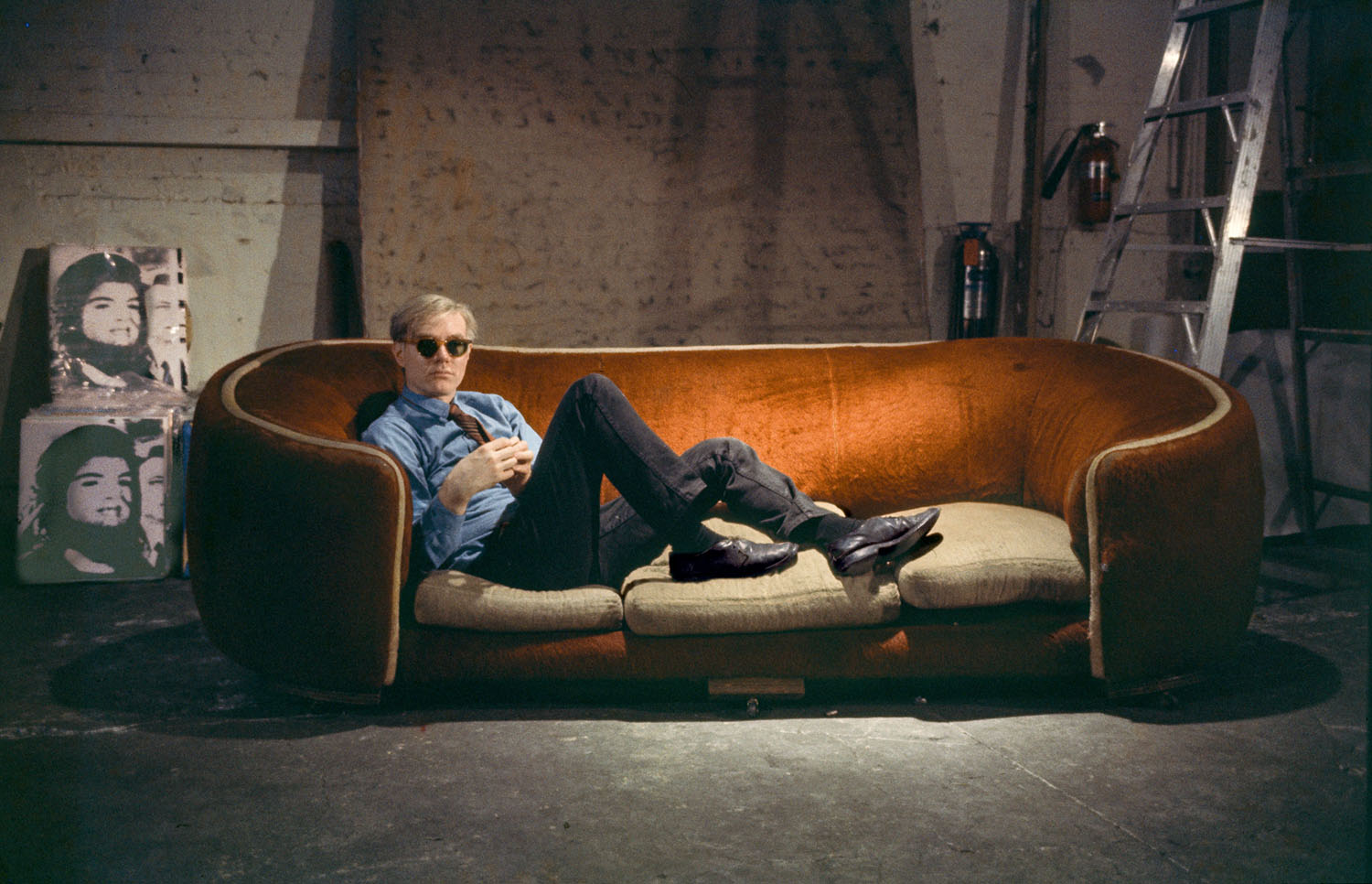
It was difficult, later, to determine whether this was because the world had changed so completely, which it had, or because he’d gotten old, which he had. Sterling liked to say that in those days all you had to do was sit around on that red-orange sofa and wait—they could meet twenty different people and receive about a dozen party invitations and secure at least a couple offers of drugs and/or sex by the end of the day.
“How many people do you think have made it on this couch?” Sterling asked as he bent over, his nimble tobacco-stained fingers rolling a cigarette with practiced ease.
“I’ll wager at least twenty.” John remembered the threesome in the film which he’d only ever seen in snatches behind himself during performances, warped by the texture of the wall and frequently interrupted by flashing lights. He amended his estimate: “Twenty-one.”
Maureen, who was seated in a partially-collapsed lawn chair that someone had dragged up from the curb, frowned around the mouth of her bottle of beer. The extent of the chair’s damage was such that she was more or less sitting on the floor anyway, her knees by her ears, with only a scrap of plastic between the concrete and her ass. As soon as he noticed this it felt supremely wrong to have considered Moe within any sort of anatomical framework and he turned back to Sterling, who continued,
“OK, how many people do you think Gerard has fucked on this couch?”
“What’s that?” Gerard was remarkably adept at picking out his own name from the near-constant chatter of the big room, one of his many unquantifiable skills.
“How many people have you fucked on this couch?”
“Oh, I don’t know,” he replied. Probably he didn’t actually know. “Fucked or been fucked by?”
The lawn chair made a shrill sound against the floor as Maureen swung her way out of her seat and walked off.
“Ah,” said Sterling, unperturbed, affectionate. “Sorry, Moe.”
“Sorry, Moe,” Gerard echoed.
“Don’t be!” she said. “I’m gonna call Mersh. Andy, sweetie, you gotta spare dime?”
“Maureen spends more time with your girl than you do, Stella,” John said.
Sterling made a noncommittal sound, too focused on digging around in his pockets for a lighter.
Ondine, passing by on his way to switch out whatever opera record was currently playing: “Oh, that Maureen. You know, she—”
“Leave her alone,” said Sterling and John in unison. There was no real urgency in the invective but Ondine managed to look appropriately contrite anyway, a rare feat.
“Leave who alone?” came Lou’s voice from behind and John was surprised by the way his own shoulders jumped. Lou was like Andy in that he could be very quiet when he wanted to be, and then appear abruptly and whole as if conjured from the ether.
The difference was that Lou could very capably cause a scene whenever he so wished, while Andy usually got other people to cause scenes on his behalf. For all the excess of paint and foil and powder and money, Andy did not relish making a mess himself. That was the first thing John would think of when he heard about the elevator and the gun, once he knew that Andy had not died: God, the mess!
“Moe,” Sterling explained.
“Leave Maureen alone,” Lou said automatically. He walked his fingers along the back of the couch behind John’s head, dragging his nails over the fine pile of the fabric.
Ondine made a dismissive gesture, his wrist forever on a hinge, before marching off like he had somewhere important to be.
Gerard showed them his palms. “Anyway, I really don’t know.”
“Know what?”
John rolled his eyes at Lou’s complete inability to exist on the outside of a conversation, his now-familiar needling.
“How many people Gerry’s balled on this couch,” Sterling said.
“What, you don’t keep a dance card?” Lou asked Gerard, who laughed, utterly guileless in spite of everything.
John was partial to that “a” sound of theirs in words like ball and talk, how their accents bowed around the vowel like warped wood. It was neither cute nor charming, merely pleasant on the ear in a platonic sense, a ticklishly gentle touch. “You’re the one with the accent, man,” Lou told him when he made the mistake of commenting on it once, in that opaque way of his, partially pinched from Andy but also his own concoction of persona and pith. The eternal question: was it a put-on, or not? No one could tell.
Lou inserted himself between the couch’s curved velveteen arm and John’s side, practically jamming his elbow into John’s throat. John stretched out his legs, jostling Lou in turn.
“Cut it out, man,” Lou griped, trying not to laugh, and suddenly it was all funny again.
“I was here first.” John felt childish in a pleasant way—like a child, he supposed.
“Aw, who wants to sit on this piece of shit anyway.”
“Gerry, evidently,” John said.
“I guess it should belong to him. God, I’m going to catch VD just sitting here.”
“If we institute a policy of reallocating furniture on the basis of sexual partners,” Sterling pointed out, “we are going to be dealing with a lot of ownership disputes.”
“Poor Maureen,” Lou said. “Not a stick of furniture to her name in this joint.”
“She’s better off for it,” John said.
“Let’s all pitch in and get her an ottoman or something. You know, something real classy, with tassels. Completely unsoiled.”
By this point Moe had returned from the telephone and wanted to know what the hell they were all giggling about.
“We’re gonna get you an ottoman,” Lou told her.
“An ottoman! What do I want with an ottoman, for shit’s sake?”
“To put your feet up on after a hard day’s work!” Lou cried. “All that standing. You poor thing. It’ll be nice, you know, one of the ones with tassels. Don’t you like tassels, Maureen?”
Moe looked at him blankly for a moment, then wrenched her face into an expression of exaggerated distaste. “No thanks, hon. Gosh, you boys are just so strange sometimes,” she said, smiling now, and they all fell apart laughing once more.
It was only later, on the other side of everything, that he realized the answer: it had all been blindingly, improbably real, every second of it in that huge silver room outside of time, the way nothing else ever was again.
In California there were no clouds, only smog, backlit by what felt like a perpetual mid-afternoon sun. His eyes seemed anxious to overcompensate for the sky’s untampered vastness by freckling his vision with translucent apparitions that jolted and jumped when he tried to follow their movement. They always wore sunglasses but he’d briefly relinquished them for the sake of a swim. He floated on his back and squinted up into the postcard blue.
Danny asked him the first time they met whether their glasses gave them weird tan lines as a result of the dozen or so multicolored solar flares on their faces in every performance. Maybe now he could even out his suntan.
Most of the rest of their entourage were gathered poolside in varying degrees of undress, bare shins and shoulders fluorescent in the sunlight. Now more than ever Mary’s preferred nomenclature—the Mole People—seemed apt. Except for Gerard, of course, who was already gorgeously bronzed and insistent on running around in the tiniest swimsuit ever sold in Los Feliz until he got arrested and then at least he stopped carrying his whip with him when he did it.
Maureen, dressed more or less exactly as she would have been in New York in slacks and a long-sleeved shirt, was talking to Andy and Paul about which was the nearest church for Sunday mass.
“I’ve never been to church before,” Lou commented as he scrubbed the hotel-issued towel over the crown of his head and then slung it around his neck.
“Not even on Christmas?” asked Cale. He was the palest of them all because up until that morning he'd been locked in his hotel room with the blinds drawn fucking some girl for five days straight.
“We didn’t really do Christmas,” Lou said drily. He sat down on the chaise lounge between John and Sterling, who was snoring lightly.
“Right. So…”
Lou realized with some measure of delight that he didn’t know the word. Another crack in Cale’s worldly façade. “Nah, we didn’t do Hanukkah either.”
He grunted and turned back to the book he was reading. He set the paperback on the negligible curve of his pale, weirdly hairless stomach, and Lou could see where the thin pages had been warped by the moisture that still clung to his skin.
“You should come, honey,” said Maureen. She stroked his hair as if he were a little dog, flattening the damp curls with the palm of her hand. It made him feel young and loved. “You wouldn’t have to do anything. It’s nice.”
“Sure, what the hell.”
Inside the church it was dark like a piano. No fluorescents, no urgency, just the narrow spokes of sunlight splayed upon the wall and their man like always, crumpled and pale, strung up and out over the dais where the priest stood.
Lou sat in the pew and closed his eyes, not listening to the homily, just absorbing the fluctuations in tone. The rise and fall of a point being made. It was almost always his first instinct to distill the auditory into recognizable verbiage but there was something about all that talk of fire and brimstone that really turned his brain off, and besides most of it was in Latin anyway. Just sounds in the shapes of words. Maureen had asked him to take off his sunglasses when they first walked in so the backs of his eyelids were a lurid red where the sun reached him and then dark again when he tilted his head back to rest in the cradle of his shoulders. He could hear the creak of straightened elbows in sport coats and then around him everyone began to sing.
A hymn, something he obviously didn’t recognize. One woman’s voice was piercingly flat but the collective swell of human voices overtook the bum notes and he allowed himself to be carried away on its tide.
It must be nice to feel like you could ask for forgiveness. It must be even nicer to feel like you'd really been given it, just because some guy had died in a particularly horrible way a thousand years ago in the middle of the desert. He had to admire the desperation of it all.
The susurrous movement of polyester hemlines being readjusted and everyone was seated again. He opened his eyes just in time to see Maureen making a disappointed little face at him. He wasn’t sure it was because he hadn’t stood up or because he hadn’t sung.
The priest droned on and Lou’s attention was invariably drawn to the mangled body of Christ, the weeping gash in his side, each droplet of blood meticulously rendered in shades of rust along the contours of his pale ribcage. If God was so perfect—and Christians were always real fucking clear about that if nothing else—then how come He’d made a son who could die. He should have made Christ bloodless. That would have really scared the Romans, when it was time to pound the nails into his palms and nothing came out.
Maureen drove them back to the hotel and Lou was momentarily jolted into a memory, half-asleep beside his sister in the backseat of his father’s station wagon, something grim on the radio. He imagined a parallel universe in which they were a normal family coming home from church for a Sunday roast, unquestioningly chipper.
That would make Moe and Andy his mother and father, which was maybe the most hilarious thing anyone had ever come up with.
“Gee, Lou, what’s so funny?” asked Andy, twisting slightly in the passenger seat.
Maureen peered at him in the rearview mirror. Lou was glad to see her smile.
“Nothing,” he said. “Just something I thought of.”
He went back to the pool by himself that night once everyone wandered back to their hotel rooms or off to parties further into the Valley. Sunset smeared the horizon with deep, oily violets.
In the deepening dusk he pushed himself toward the bottom of the pool until its raw concrete floor touched the backs of his thighs where his swim trunks had ridden up. There it was silent: an unearthly lack of sensation except for the weight of the water above him and the press of his lungs. He flapped his arms, forcing his body to resist its own buoyancy.
Enveloped in silence he was reminded of the first few moments after the shock, before the world came back into focus. It was like being reborn with none of the enlightenment implied by the term. Just reduced to a naked soft-skulled thing which squirmed on the table, with only memories of having been suspended within a blood-warm interior, a sensation of crushing and sliding, extremely bright light and pale walls. No wonder babies wailed like that on their way out. It was terrifying to go from such depths of warm darkness into full-on light. He couldn't remember crying but around him all the sound was muffled, the voices of the doctors and his parents illegible, the hum of the machine a faint vibration at the edges of himself, and he realized that his ears were clogged with the tears that must have run down the sides of his face.
At the bottom of the pool his vision began to grow dim at the periphery and his lungs seethed inside his chest. He scrambled to get his feet under himself again and propelled his body to the water’s surface in a bolt of panic. Oxygen came rushing back into his bloodstream as the warm air hit his face like a palm against his cheek.
Nico was sitting on one of the chaise lounges by the shallow end, smoking a cigarette, watching him.
“I thought you were drowning,” she told him, unconcerned.
“You weren't gonna dive in and save me?” Lou asked, unsurprised.
“I am not a very good swimmer.” The reflection of the pool’s surface licked across her features, washed the color from her eyes. She leaned down and neatly rolled up the cuffs of her trousers once, twice, revealing her slender calves, then lowered her whole body to the concrete ground. Lou slipped back beneath the water’s surface to watch her feet, a corpse-like pale blue in the chlorinated light, as she swung them into the pool.
Around them the night thrummed with the activity of unseen wildlife calling out to one another in various unfamiliar croaks and hums. Lou’s breathing returned to normal and melted into the surrounding nocturnal ambience. The air smelled overwhelmingly of chlorine.
Nico tapped the ash off the end of her cigarette into the pool. It disintegrated when it hit the water, the pale flecks of its remains floating in the waves caused by the movement of Lou’s body as he half-walked, half-swam toward her. He drew up close and wrapped his fingers around her ankle. They looked particularly ugly and blunt against her delicate skin.
“Come take a swim.”
“I don't know how to swim.”
“Come on, I’ll teach ya.”
“I am not dressed for it.”
Lou grinned. “You can go in your bra and panties. I’ll close my eyes.”
“How will you teach me to swim when your eyes are closed?” she asked, smiling back.
She was so beautiful that you could almost understand why the Nazis went to all that trouble trying to preserve the Aryan race. He’d made this joke once before and no one had laughed except for Sterling. Besides it was doubtful that anyone else in Germany looked like that.
“Aw, you’re no fun,” he told her good-naturedly, then pushed off from the concrete wall. The water leapt up and grasped him by the shoulders as he fell backwards.
Nico didn't seem particularly insulted by his comment. She finished her cigarette and flicked it into the pool, which should have seemed trashy but on her it of course just looked like elegance personified. “I am fun,” she called.
He returned to floating on his back, looking into the starless sky, and wondered what would happen if one day a black hole, or God, or something else terrible and divine, opened up above him and sucked his whole self right out of the universe.
Through the curtainless window the waxing gibbous was as incandescent as any street lamp. Moonlight pooled on the floor and the sundry grime flung intricate shadowy patterns across the uneven hardwood, where they lay in the cinders of a fire that had only been partially successful but now the atmosphere was greatly improved regardless.
He reached over and for a second John thought he would do the thing he kept taunting him with but all he did was brush the blunt edge of his curved knuckle along the side of John’s throat. He imagined he could hear the scrape of Lou’s dry skin against the grain of his own stubble.
“A love bite—really, Cale? What are you, nine?”
The constant bruise just along the line of his collar was the result of his commitment to strings. It was an easy joke, a lazy come-on, one he’d heard before and frequently from Lou. He wondered how long a bruise had to last before it was no longer a bruise and instead something more permanent, unhealing, a textureless scar beneath the skin’s surface. Lou pressed harder and he imagined the ruined blood vessels scattering under the pressure, slithering away from the point of contact like droplets of oil dispersing in water, repelled on a molecular level.
Without meaning to John’s lashes trembled. Lou saw of course and his gaze turned briefly molten. He shifted so the cool flat of his fingernail pressed against John’s jugular. It wasn’t pain so much as a very sharp awareness of skin. Then he let his shoulder go slack in its socket and his hand fell away, accidentally-on purpose catching his fingertip on the collar of John’s shirt as he did.
“People might talk.”
“Oh, they already do, my dear,” said John. He was relieved to hear his own voice come out at an even pitch. “But it’s hardly my fault.”
Lou had small hands for a man—not girlish, just small. Permanently far away. “No?”
John made himself look into his face then because he knew that Lou always took his avoidant gaze as an indication of acquiescence. More than anything Lou loved when he could make someone come over shy or scandalized, and he was a genius at turning every gesture into a sign that could be interpreted according to some inscrutable code like poetry or goddamned tarot cards, so John strove to deny him any opportunity to do either. This along with many other facets of his personality made him very difficult to argue with and even more difficult to ignore.
But he had already turned back to his guitar. Lou’s focus was so intense that one could not help but feel its absence as a sudden cold draught: a window blown open to the night air. He pulled at each string one by one, pausing long enough in between to let the note die a natural death, vibrating itself into silence. John watched him, mostly because there was nothing else to do and he felt entirely too sedate to traverse the whole of the apartment to retrieve his viola or bass. He imagined himself lugging a sledge across a great, featureless terrain. That's what it would feel like if he got up now, he was sure of it, so he remained on the sofa, suspended within the fragile non-melody.
He traced his finger over the floral pattern of the fabric in time with Lou’s strumming. Near the deep brocade crevasse between cushions he noticed a stain whose consistency he recognized from various hastily repurposed T-shirts and socks in his past. He paused, let himself feel the requisite disgust as well as a perverse little thrill at the squalor in which they lived, then wondered whether it was Lou’s or somebody else’s. Before he could come to a conclusion, he nodded off.
When he came back into consciousness, Lou was no longer beside him on the sofa. John turned his head slightly, still under the impression that he was able to move only the most distant of his extremities, and saw that Lou had retreated to his room and was currently in the process of getting ready for bed. He did so in a way that made it clear he did not think he was being watched: there was none of that practiced lasciviousness in his movements, the queeny sweep of his limbs through the air, nor the particular way he always held himself even standing still in the presence of any other living body. He was just a man alone in a room.
Through the half-open door John watched him undress, the perfunctory fine motor control involved in unclasping his belt and shimmying his jeans down his hips, stumbling a little as he stepped out of them. He was extraordinarily pale and scrawny, which of course John knew already but it was still startling to see twice as much plain evidence of it than he typically did. Dark hair covered his legs and his ass. He turned and there was his dick, obviously, quiescent and small within more dark wiry hair. His being circumcised was another fact that John knew already but that, too, was worrisome to see for himself, and he resisted the instinct to cross his own legs in belated sympathy.
He felt only a faint pulse of the arousal that he always worried, in some abstract way, would someday make its presence known under similar circumstances. Far stronger was the nauseating pang of something close to fondness deep in his stomach—or perhaps it was not strictly fondness nor even pity but instead the sort of emotion a person might feel toward a mangled animal on the side of the road. A clinging, filmy sensation that only ever existed in moments like this, cocooned in a narcotic warmth, himself a man alone in a room. He didn’t know the word for it.
Lou’s chainlink bracelet rattled when he set it down on the table at the foot of his bed. He seemingly noticed for the first time that the door was still open and padded across the room to close it. John listened to the mechanical innards of the lock rearranging themselves to fit the key as it went in, turned, and retreated.
He kept having these visions and sometimes when he and Cale were in a particular state of mind they felt almost real enough to touch and through the power of Andy anything was possible anyway, so it was a game they played sometimes, a game of one-upmanship the same as all their games, watching the space between them swell and become saturated with ideas.
They sat in the dark—why was it always dark? at Piero’s where Lou lived it was because the electric lines kept getting cut but at Cale’s it was because they just never bothered to turn on the lights—and imagined a machine.
There was a tape that took up every minute of every hour of every day of the entire year, one extremely long tape in your wall a sonic reflection of your life as determined by the sound engineer with no beginning no middle no end and if you pushed the recordings on high enough you could bow it like a string like a garrote like a live wire like anything fine and deadly and scarcely visible.
There was a film that lasted forever an image of the Empire State Building on your bedroom wall where the tape lived like Billy behind the foil as all the lights in the tower flicked on and then off in a cascade of electricity and it was there for so long and for so still perfectly framed that you could almost believe it was really a window and you were just looking outside.
There was a record fixed with a built-in crack so it would never ever reject and it would just play and play until you crossed the room with the Empire State Building on one wall and the tape in the other and you took the arm off held it delicately between your fingers to make it stop and any instrument can be played all you have to do is touch it you touch a guitar neck body it makes its particular sound and people have their sounds if you touch them in the right spot neck body they make it too.
He was singing their song about how heroin will be the death of him while Lou was sick in hospital maybe dying of the needle and all he could think about was how good they sounded without him, steadier on their feet than Lou would have ever dreamed. He felt as though caught within the mucousy confines of an enormous throat and still not at all unhappy or even uncomfortable. His physical person and its earthly comforts were unimportant. For the first time he was singing the right words.
The sweat ran down from Sterling’s wrists and off his elbows into a puddle at his feet. John glanced at the cable that connected his guitar to the amplifier and if his brain hadn’t been totally melted by the humidity he might have worried. But then Sterling was so thin that there probably wasn’t enough space in his body to hold on to any of that electricity and it would pass right through him without causing any harm, slipping between his molecules and coming out static on the other side. The thought made him laugh. He was laughing a lot, which felt strange, out of nerves, which felt stranger.
Out of the corner of his eye he could see Moe watching him the way she usually watched Lou, with frank, unmovable concentration, her tongue in between her teeth. In her arms the bass guitar looked gigantic but she handled it as well as anything. Angus briefly came down from his own plane of reality to confer with them and then summoned a bleating little rhythm on the drums which grew denser and more insistent as the night went on and they all adjusted to their scrambled positions.
They must have each sweat out half their weight over the course of the two-week residency. Every night was a new high. When Lou was back from hospital they were all of them thinner, muscles closer to the surface, tendons standing out in stark relief.
“We were great, man,” Sterling told him in some dark-walled café over coffees sipped as slowly as possible to avoid accusations of loitering. “I mean, really spectacular. Goddamn, I wish we had a tape. You should have heard it. And everybody dug us. It was like fucking Shea Stadium in there.”
The thicker Sterl laid it on, the deeper Lou’s scowl dug itself into the corners of his mouth. John could have intervened but why should he bother? As was sometimes the case, everything Sterling said was true.
“I guess I never really knew it could be like that. People liking us, I mean.”
“What the fuck are you talking about?” Lou finally snapped. “People like us.”
“Not like that they don’t.”
“I’m glad you're feeling better, sweetie,” Moe said but even she couldn't stop Lou from seething.
It turned out that there was a tape that, like most of them, gurgled and spat with feedback. He didn't listen to it but he liked knowing it existed, especially after Angus disappeared the first or fourth time and then even more so when he really disappeared for good. As often as people were showing up they were also constantly disappearing, slipping out of existence, and this, too, was difficult to explain, later.
Sterling liked to say that in those days all you had to do was wait for someone to burst out of the elevator and say, Quick, come on, let’s go. And zoom, you’d go, and be gone.
The walls were dark crushed velvet, shimmering dully as they expanded and contracted with a pulmonary rhythm.
Clinging to the interior of Cale's elbow was a bit of blood which Lou gathered on the tip of his finger and then wiped on his jeans. It was such a tiny amount that it didn’t even stain the denim and Lou was sorry to see the fabric unblemished. John didn’t seem to notice; he was facing away and he didn’t so much as twitch at the contact.
“Once when I made it with a girl she bled. Back in Wales.”
Lou glanced up. John didn’t usually talk to him about his own sex life except in oblique and accusatory terms that revolved largely around whether Lou had been balling his girl. When they shared an apartment that kind of talk would have been totally redundant, anyway, considering how thin the walls were and also the fact that John didn't even really have his own bedroom. It had been torture in the beginning, the sting of rejection still so fresh and the sense that John was really only doing it to drive his point home. The first time Lou just squirmed around on his mattress, face down and fully clothed, as he listened to the sounds of John getting blown by one of the obscenely pretty society girls that were always flitting around the Factory, pretending he was doing anything else even though it resulted in the inevitable.
After that he stopped pretending but it was too pathetic in his mind to actually make an effort to track John’s movements through the city so he left it up to chance. If the clatter of the front door and feminine laughter woke him close to dawn, who was he to deny himself the nominal pleasure of jerking off alone in his bed, attuned to the gradual rise in pitch between the two voices on the other side of the wall? And who was he to deny himself the slightly less nominal pleasure of finding that same society girl at a party the next day, now that he knew she was up for it? If he came while thinking about where her mouth had been before this, whether he and Cale were mixed together somewhere in the frothing dark of her guts—well, it was no one's business but his own.
He was familiar with how John’s voice went taut and then buckled when he orgasmed, and how his face contracted in pleasure across the stage when he managed to wrangle a particularly fractious line on the bass, and how his jaw slackened when the needle breached his blood, so it was easy enough to sketch out a fairly vivid mental image of everything else from there.
Sometimes Lou had wondered if he caught John in one of his rare accommodating moods whether he could be convinced to at least jerk off in front of Lou. Kid stuff, like what he did with Billy. He wouldn't look at Lou when he did it, just glare at the wall or the ceiling or something, pretending that Lou wasn’t there at all. Maybe he’d wear his shades so Lou couldn’t tell where his gaze fell, which would probably look pretty fucking stupid in reality, but the thought of it got him hot anyway with embarrassing ease.
Or it had, for a while. This was by that point a fairly well-trodden path in the gardens of Lou’s imagination and thus it didn’t really compel him. More interesting was the mention of Cale’s life Before. It was difficult to imagine him young but he must have been, once. Maybe he sprang fully-grown from the head of the Welsh equivalent of Zeus. Lou knew the practical facts of how he’d landed on this side of the ocean but it still sort of defied belief, nevermind the dumb luck of everything else that resulted in his current location a couple feet away on the floor of Lou’s apartment.
He was still turned in the opposite direction, so Lou could only see the suggestion of his profile and the rest was just dark hair fanned out around his ear and mingling with the ashes. “My hands were covered in it,” John said. His voice had receded somewhere deep within his throat and came out mostly as air and shadows.
Lou studied John’s fingers resting on the hollow of his stomach and imagined them inside a person, sticky with the smell of pennies.
He’d bled, too, once. In truth it had scared the living shit out of him, even after having learned to lean into the pain, although at the time he tried to seem as nonchalant as the other guy. He decided not to mention it and only regretted that John could not appreciate the full extent of his magnanimity in keeping such information to himself.
Instead he lied: “And here I thought you’d be so gentle.”
Finally John turned his head and looked at him. For a moment Lou hoped that he would lunge forward and exact some kind of revenge on him as he often threatened and sometimes went through with in response to similar comments. Or else he would get up and leave Lou on the floor, grumbling under his breath. But then there was the orange rind smile, his coal-dark eyes compressing with the force of it. He tugged his sleeve down. Too tired to fight, maybe, or too stoned.
Lou felt the jolt of his steps on the floorboards as John made his way to the bathroom. He listened to the clink of his belt, his fly deftly unclenching its jagged little teeth, the echo of his piss against the ceramic. He tried not to feel any disappointment at the sound of the zipper again a moment later.
The walls felt suddenly very close once more, the ceiling, before they fell away again, leaving him adrift in the darkness.
Cale had already and would continue to make him bleed in various ways, mostly poorly-placed needles and a couple extremely well-aimed punches, and once entirely by accident not too long ago when he swung a cymbal and suddenly Lou’s vision went dark with blood. He could hear John screaming at Bill Graham and was strangely soothed by the clang of panic in his voice across the room.
Then John was closer than he tended to get at least without the pretense of music or substances, reaching up, hesitating, and for a moment Lou thought he might strike him again, this time with the bizarrely broad flat of his palm. But he only used the edge of his sleeve to wipe the blood from Lou’s lashes. The tenderness of the gesture was so uncharacteristic that it turned Lou’s stomach instantly cold.
Sterling appeared with a proper handkerchief which Lou held to his own brow with one hand, pushing them both away with the other, irritated on principle by any commotion he hadn’t actively orchestrated. He didn’t even end up needing stitches but he allowed himself the brief mental image of fine thread gliding through the fissure in his flesh as he did his necessary sulking about the indignity of it all backstage.
“It was from the Mothers’ kit, anyway, right?” John demanded, still a bit frantic but in a way that was familiar, recognizably speedy and deranged as opposed to off-puttingly sincere with concern. “It couldn’t have been ours. Maureen hates cymbals.”
Sterling made a derisive sound. “Fucking Zappa.”
So Cale could hurt him. So what. So could a million different things he encountered on a daily basis. Falling debris from a construction site. Speeding car. Coffee swallowed too hot. Microphone stand touched wrong. The whole world revealed itself to be razor-edged from the right vantage point.
“I’m going to bed,” John said, still standing in the bathroom doorway. From the mouth of any other man under the age of 50 on the Lower East Side at this time of night, it would have been an invitation. From Cale it was just a boring statement of fact.
Lou didn't argue even though he had every right to because it was his apartment and therefore his bed that John was apparently commandeering, nor did he twist the statement into further innuendo even though it was so obvious as to be practically begging for it. He was both too tired and too stoned. “Hey, take your shoes off first, you fucking maniac,” he said just to keep up appearances. “I don't want your disgusting boots getting shit all over my bed.”
A boot came sailing through the air from the direction of Lou’s bedroom. It landed on the floor with a tremendous thud that reverberated through Lou’s skull. He waited until the second shoe joined it before yelling, sarcastic, “Thank you!”
Like junk, being killed by him was too obvious. He hauled himself onto the sofa and fell asleep trying not to think about John sockfooted and sweating in his bedsheets.
Once they’d used John’s belt and afterwards Lou had put his hand to his lower belly where his trousers were loose skin exposed slack and fish pale undoubtedly as cold to the touch and he pressed, palpated like a doctor doing some kind of test—Lou was always testing him—and his fingertip was warm and oddly damp as he dipped it into his navel and tugged and John felt his skin shift to accommodate the intrusion and it was easy to believe that he’d succeeded in pulling him apart and peering into the wet gaping cavity of his gut at the layers of flesh and fat and distended canals his weeping insides inspecting his organs under the hot light it’s no good he could hear Lou’s voice from somewhere above in the hushed urgent tones of an operating room—it’s no good, it’s got to come out.
There was nowhere for the sound to go in a room that small except for inside them. So maybe that’s why the record ended up like that, twisty and splenetic. They played as though there was an audience, which is to say loud, which is to say partly furious at each other for most of it as they ran roughshod over each other’s instrumental lines, maxing out their respective amplifiers just to see the look on the other guy’s face when he did it.
They hadn’t really used the viola much on this one and Lou was glad for it. It drove him crazy the way Cale could pick the thing up, its fine strings and delicate body which always looked incongruous cradled in his big hands, and let go all this sound. He was like fucking Rumplestiltskin, spinning straw into gold not as a gift but as a threat, piles of it glinting around them in the studio. It both infuriated and frightened Lou to think that John was always hearing something that he couldn’t get at or at the very least couldn’t properly articulate, that there was some secret dimension of what they did that John existed in alone. There were many many times when he felt confident that they had bridged that gap but the gap was still always there, underneath them as they played, waiting.
Once he’d told him that the viola had its own key entirely unique to the instrument and Lou had genuinely laughed because it was just too perfectly poetic. Cale had acted like he didn’t understand what was so funny.
They begged him for the notes; he told them no. He was uninterested in the language in the way only a person who instinctively spoke it could be. Lou felt like he was back in school, poring over the sheet music with Sterling whom he knew for a fact was just as frustrated by Cale’s refusal to help them. It always bothered Lou enormously when he didn’t have the proper vocabulary to describe something.
He wanted it, by God, more than he had really ever wanted anything. Not because it would improve his musicianship or because it would make the copyrighting process easier but because he didn’t want Cale to have any part of the songs that he couldn’t also have.
He came out of the subway half-blind because the sun was so bright and the wind so cold that he quickly became convinced that the topmost layer of his cornea would slough off onto his face. It was the kind of wind that bore a body forth as if by an unseen hand, stumbling to catch up with one’s own steps, an evil wind that sliced through any gaps in fabric at any flesh foolishly bared.
So he walked the last block with his eyes closed, opening them a sliver every couple meters to be sure that he wasn’t about to veer off the curb into traffic.
When he got back to the apartment his cheeks were streaked with salt. For some reason Lou was sitting in the kitchenette—Sterling must have let him in although now Sterl was apparently nowhere to be found. It probably didn’t speak well to his self-preservation instincts that John's first reaction was not to launch into a flying attack at an intruder. In fact he barely flinched, but he was glad because it was the opposite reaction that Lou would have wanted.
“Have you been crying?”
John ignored him, went to the sink for a glass of water. Couldn’t find a glass—almost everything was packed into boxes—so just cupped his hand under the running tap and brought it to his lips, slurping obnoxiously, heedless of whatever filth lurked in the lines of his own palm. The lukewarm water soothed the chill from his fingers and as he thawed his brain reoriented toward the junk humming promisingly in his back pocket.
He was aware of Lou tipped backwards on the chair’s two hind legs, near enough by dint of the small space that he probably could have reached out and shoved him off-balance before Lou realized what he was doing. How loud would his skull be against the floor? Not very, cushioned by his rat’s nest of curls. Quieter than a glass bottle or a mirror or a thunder machine. Quiet enough that the neighbors wouldn’t have complained, back when they still complained.
“Did your old lady finally get wise and leave you?”
“Come on,” John said finally, embarrassed by how utterly transparent Lou could be when he was not putting all his effort into seeming inscrutable. “Give it a rest, my dear.”
“What?”
“You know what.”
Lou allowed the chair to return to the floor. He leaned forward and set his chin on his upturned palm, watched through half-closed eyes as John rooted around in the icebox for anything of nutritional relevance and, finding none once again, settled instead for chewing on his thumbnail. He wanted a hit but he didn’t want to share and thus had to devise a way to remove Lou from his home. He figured the best plan of action for this was to remind Lou of their contractual obligation to one another. He said, “Don’t you want to figure out how to do something with the tracks we just recorded?”
“What the fuck for?” The smugness slipped from his face.
“For the next album, Lewis.” Already his brain was churning with more ideas. They had to sort the levels, he knew. Gary had tried his best, probably, but you could hardly hear Moe at all and it was obvious that she was disappointed. They had to figure out a way of working with the compression rather than against it, a new kind of sound, something with more depth than simply noise crashing into noise. Or they could go in the complete opposite direction like they’d just done with “Stephanie,” catch people unawares with their loveliness, or truly shock the public with proof that they were in fact capable of having fun. As far as he was concerned the only constraints they had to worry about were practical ones involving the record company and the technology, and even the latter could be twisted around in their favor if they were able to put a little more thought into it ahead of time. He missed rehearsing, jamming, long hours spent unspeaking except for “Down a half step maybe,” or “Wait to come in,” or “Yes, that’s exactly what I was thinking.”
“We just put one out, for Christ’s sake,” Lou said. “Besides I haven’t written anything else.”
John set his teeth, promised himself the biggest possible dose he knew would not outright kill him as a reward for tolerating this. It wasn't even true—they had scads of songs that they played all the time that they still hadn’t recorded, songs that their meager following would recognize and possibly be pleased to have on a proper record to listen to at their leisure. Perhaps he even knew a couple of those people himself. “Right, well,” he said. “I’ve written some things I could show you, they’re—”
“I don’t think that really matters.”
All the unearthly cold of the outdoors came rushing back into John’s lungs at once. “I beg your pardon?”
Lou repeated the question back to him in a mincing, mangled version of John’s accent, then continued, sounding bored, “You’re not the songwriter of the group.”
It was an old argument, old enough that John had to assume Lou didn't have much else in the way of ammunition. Lou could pick better fights than this, he knew. The lack of effort was almost insulting.
“Anyway, Sesnick said—”
“Oh, Sesnick said,” John spat. “Christ, it’s a wonder you can even walk around with his hand stuck that far up your ass. Or I suppose he pulls the strings from above.”
“Sesnick said that it makes more sense to market the group with one frontman ‘cause that’s how they all do it. Without Andy there’s no marketing angle. As you can plainly fucking see from this rollout.”
They hadn’t spoken about Andy’s departure except once or twice, in the jarringly matter-of-fact tone that Lou used almost exclusively to convey truly shocking information. John found the mention of Andy and marketing both deeply distasteful. “That’s not our fault.”
“Well it doesn’t matter whose fault it is. The bottom line is that we’re not exactly topping the charts here.”
All he ever did was bitch. “God, Lou, what do you even want?” John asked. It was the closest he ever came to saying it outright. He heard the thread of desperation in his own voice and hoped that it could be mistaken for nonspecific irritation, or being generally strung-out.
Lou glanced away and shrugged, trying to appear casual, but now that he was paying attention John recognized the starved look in his eyes, the tightness of his jaw.
John laughed, incredulous. “Fuck off.”
“C’mon, I know you have some on you.”
“Get your own,” he snapped, and it was ridiculous how young he felt, like a child on the football pitch somehow goaded into making a fool of himself in front of all the other boys. Lou had other people he could go to, John knew. He was just here to humiliate him.
“Saving it for Betsey?”
“She doesn’t take smack.” A wave of nausea at the mere thought of it.
“Scared?”
“Smart.” Smarter than us, he didn’t need to add. He hated the way Lou said her name, a black hole of regard.
Lou shrugged again, like he couldn’t argue with that.
“I’m moving in with her,” John added, because he couldn’t remember whether he’d already told him and he suddenly needed to remind them both that his days did not in fact revolve exclusively around Lou’s whims. He gestured to the boxes which represented the material sum of his life: almost entirely music-related paraphernalia, machines and wiring, tattered paperback novels, bundles of worn black fabric.
“Aw,” said Lou with zero affection in his tone. “You’re going to make such a gorgeous little wife for her.”
It was like being injected with it, how quickly the feeling of rage entered him. “Go fuck yourself, Lewis.”
Lou studied him for a moment, then affected a put-upon sigh, like he was so world-weary, and leaned back in his chair again. “I’m telling you, man, this repression act, it’s getting old.”
Sometimes he thought about saying something, just to see Lou’s reaction, to witness how the conversation might stutter to a halt in the wake of it. He wanted to see him recoil. It was so difficult to catch him off-guard. You’re not fucking special, he wanted to say, because that was the part that would really devastate him. You think you're the only one?
The closest he had ever gotten was mentioning his time in hospital, once when Lou had been feeling particularly wretched and sorry for himself, and for some reason John thought the information might have provided him some solace. He wasn’t sure that it had, in the end, and now Lou had this knowledge which could not be taken back, but it was possible he hadn’t cared enough in the first place to commit it to memory anyway. Lou’s capacity for care ebbed and flowed like a tide that refused to submit to the natural pull of the moon, and that was itself another risk that John didn’t care to examine too closely.
Head wounds tended to bleed profusely regardless of the degree of actual injury. He knew this from the time he’d sliced a cymbal across Lou’s brow.
So maybe it wouldn’t be loud if Lou fell over and cracked his head on the kitchen floor, but there would probably be a lot of blood. John focused on the image in his mind’s eye and found himself soothed by it. All that vital shit inside of him which he’d seen plenty of times in fits and literal spurts and in various metaphorical capacities, wet and warm. The place where his stories lived, split open at last.
“Don’t fucking come back here,” John hissed.
The ashtray shattered against the door frame near Lou’s head, sending him out in a shower of glazed ceramic and cigarette butts. “Congratulations to the happy couple!” he called back to John through the keyhole.
It was like being inside a great metallurgic womb except a womb would have been warm, like a subway station in winter—stifling but still a relief to be held. Here it was heatless. Andy or Fred or somebody must have forgotten to pay the bill. The room usually contained enough bodies to create the impression of insulation anyway: sweat beading on the silver foil, fog moving inside on little cat feet. But now it was cold.
He turned and through the dark he could see the shapes of girls scattered about, and boys, and whoever else, lounging on the couches and supine among the silkscreen materials. He didn’t recognize any of them; their faces shifted out of focus into Francis Bacon blurs as soon as he fixed his gaze on them.
A steady patter of rainfall from the ceiling behind him. Sometimes it was tempting to pretend that the Factory was its own world, a distant planet that could not be touched by the realities of life on earth, but then the outside always leaked in somehow. He looked down and was not surprised to find that he was up to his ankles in water, unable to lift his feet from the floor, as if moving through a much thicker liquid that sucked noisily at his boots.
Alongside the rain there was a distant orchestra of shrill frequencies, barely within hearing range. Transistor radios, tuneless. These belonged to the girls, he knew, who laughed hysterically as they twiddled the dials and held them up to each other’s ears. The blare of car alarms joined them, liberated from the mangled frames of a hundred crashed vehicles that were stacked along the walls of the Factory.
He was holding his Gretsch. The peeling faux leather strap was clammy against the join of his neck and shoulder. The cable ran from the guitar’s output jack and disappeared somewhere down under the water that had since spread to cover the entirety of the Factory floor and risen to nearly halfway up his calves. His boots were filled with it. The girls looked at him expectantly and he realized that he was supposed to be playing, that this was an important performance for some reason.
He was shivering as he started to strum whatever popped into his head. The girls frowned when no sound came out, and one of them leapt from the red couch to snatch the cable up from the floor. It turned into an eel of sorts, slippery and twisting violently in her fist, flicking droplets of water everywhere as she splashed over to where an amplifier was plugged into the wall. He couldn’t move his feet.
“Hey—” he heard himself say and then there was a spectacular roar of light.
When he woke he felt as though his skeleton were still on fire.
He was having the dream where he got everything he ever wanted.
The sky, rheumy that morning with fog and now blown blue and unblinking above the lake which was dotted with a dense archipelago of pianos. He ordinarily dreamt in a limited palette of muted greens and greys. The landscape of Tanglewood was similarly sloping but somehow tamer and friendlier than the countryside of his childhood memories which were mostly congested with silence, old companions composed of shadows.
The lakewater murmured against the boats’ hulls. Even at a distance he could hear the paperclip tightropes twinkling with the movement. Guts abrading guts and the hush of hollow-boned wings in flight. All his small and easy violences in the way of young boys: switching on a torch and paring away the darkness in great sheaves, discovering the sounds a mouth could make, realizing that to play anything is to wear it down.
Then the dislodged plugs and all the little boats with their piano passengers were filling up from the bottom like eighty-eight bathtubs in reverse. Their unswimming bodies descended upright into the brackish water, each note swallowed by the murk.
Here was sweet alarm, a familiar glance on the water. Sound as far as the eye could see, like the afterimage of an insistent sun burned into his retinas when he opened his eyes.
They were young when they first met, young and flush with hormones and the unbelievable naivety on which the whole industry ran. That was the explanation that he gave ages into the future, years past the dates he had envisioned, thinking himself a realist, on his own headstone. Hurt came easy at that age, both the inflicting and the enduring.
The others might acquiesce but he refused to spend the rest of his life as a needle scraping the same grooves over and over again. He made sure of it. Even as it was happening he deferred to Sterling’s memory.
Sterling, the conjugation for which there was no verb! Sterling, who everyone said could turn sideways and disappear. Who one day did just that, swinging his empty guitar case, or so he was told. Theirs was a band meant for leaving, wasn't it? Hadn't that borne out to be the case for all of them, even Maureen, equal parts stubborn and loyal? So it was not this horrible act of betrayal to have axed them all one by one. It was speeding up the inevitable. It was an act of mercy.
Of course out of all of them it was Cale who ended up writing a fucking book.
They were young then and on the records they always would be. He didn't understand, could never understand, how that wasn't enough.
For a long time afterward he would close his eyes and see Sterling stood in the doorway and this was how he chose to focus his feelings of betrayal and resentment: Lou had marred the memory of dear Sterling, long and suffering. Leaning slightly away as if fearful that John would react by strangling the messenger. Sterl could be as mean as any of them, although it was often tempered by his dry, authoritative tone, but John couldn't imagine that he relished being forced into an act of cruelty. How many times had Sterling stood in his doorway, almost always welcome? Who knew when he would be again?
John felt as though ransacked. For a week he could not rouse himself except to go to the toilet and that was only because he knew shooting up in their marriage bed would be a bridge too far for his already beleaguered wife, who likely had not expected to be nursing her husband through a breakup so soon after their wedding. Or maybe she had. Lou was allergic to tact, after all.
Anyway he was only taking it to keep from dying.
Otherwise he was not sleeping so much as simply lying there in the stale embrace of their mattress in the corner of the loft. The sole evidence that time passed at all was the sound of the door opening and closing at uneven intervals and very occasionally the warmth of Betsey beside him on the bed. She didn’t sleep either—she never slept—but she knelt briefly in the crook of his knees and touched his temple as if to check his temperature. She held his head in her lap like he was a soldier bleeding out on a battlefield but even then he could feel the way her thighs were straining under the momentary pause, her gaze fixed on the clock on the wall. She had places to be, things to do. For the first time since he left Garnant, he could not say the same for himself.
“He’s punishing me,” he said aloud to the empty apartment, voice hoarse and unfamiliar from disuse, and knew it was true. This was worse than being marked a sinner in the eyes of God, because this was real.
He noted with a grim sense of irony that his symptoms were not unlike those of a man experiencing withdrawal.
Along with the ticking of the clock, the telephone’s shrill plea for attention penetrated through all other ambient noise at all hours of the day and night and it felt like someone was driving a pick into his skull. He realized he’d never lived anywhere with a working telephone, or at least anywhere that people bothered to call. It was like being back at the Factory, or Piero’s apartment with the million jacked phone lines. On the fifth day of exile he tore the plug out of the wall. On the eighth day he reconnected it and called Nico.
He wanted to know if she was working.
“What about your band,” she asked.
“I quit.”
Her tendency toward long, ill-timed pauses in conversation translated especially poorly over the telephone. John felt like he was conducting a séance, waiting for a message from an unearthly party who may or may not be present. Eventually she said, “He is a very difficult man.”
John looked out across the room, forced his eyes to focus on his surroundings for the first time in more than a week. Thin streams of sunlight emerged from between the blinds and set all of Betsey’s little perfume bottles aglow. Veins of watery pink and seaglass green shimmered over the high white walls, undulating faintly with the movement of the curtains. Bolts of fabric spilled over the dressing table onto the floor, each sequin a perfect tiny pinprick of light. Everything glittered and glared.
“John?”
He always liked the way Nico said his name, that common noise made lovely in her elsewhere voice, even when she was screaming at him. No amount of compression or distance could leach the sonorous depth from it—they’d all discovered that onstage and in the studio long ago. She told him that Danny had gotten her back on Elektra. There was an album in the works, written pretty much entirely on her harmonium. John smiled to think of her hunched over the tinny little instrument, ensconced in cigarette smoke as she worked long into the night. “Maybe you could…” she was saying.
He nearly choked with relief at the prospect. He thought suddenly of Andy and felt seized by a sense of guilt. It must be killing him to be laid up in hospital for so long, unable to get back to his art. Sometimes it seemed as though the man was the only one who understood the insistent clamor of that need to always work, sure in the knowledge that everything good was the result of real effort. Most days he had the presence of mind to remember that Betsey knew this, too, in her own way that was not at all concerned with John. It was something he liked about her from the beginning. He had never needed that from her because his own notion of work was so bound up in the band, in the clotted remains of Lou’s seemingly endless verbal hemorrhage.
He ached for it all, with such an acuity that he found humiliating even within the privacy of his own imagination: images swallowed up by light. Scenes that were almost definite but impossible to catch or prove to anyone else that they really happened. Melodies that defied memorization no matter how many hundreds of times they were repeated in a single night. Songs that ricocheted off the reel to reel and got lost in the squealing gale of feedback. Sound so dense that it took on a texture. Every small thing that they were too stupid and young and stubborn to save.
“I’d be thrilled,” he told her, meaning it.
It seemed no time had passed at all when he came upon their third album in a shop somewhere in Michigan. He was perturbed by how normal they looked in the black and white picture, seated on one of the second-tier Factory couches: Maureen slouching and a little reproachful, Sterl in his same old striped shirt and boots, Lou ruddy-cheeked and grinning the way John rarely pictured him in his memory. The new one seemed sweet sitting there in the shadows—he had to be, in order to play the role they’d cast him in. Billy told him later that he was a Pisces, too, that this mattered to Lou, and the next time he saw another photograph of them in some music magazine John studied the man’s eyes in particular, trying to see where their pupils might have aligned. But he was only reminded of Lou.
Without him they were flaccid, pathetic excuses for rock songs, weak in the jaw, and the next record was even worse. One was reminded of the cloyingly artificial floral scent of cheap perfume. All he could hear were the gaping holes in the fabric of the melodies.
He had to know what he’d done, goddamn him. He wasn’t fucking deaf. None of them were, against all odds. Still, Lou had always been good at hearing what he wanted to hear, or not hearing what he didn’t want to hear, which was why he was able to write such brilliant songs and also why he’d fallen for Sesnick’s schemes.
John poured his grief and rage into the puzzle of Nico’s compositions and came out the other side bruised all over and proud of what he’d managed to create with and through her. He was touched by Nico’s weeping praise in the studio but there was something much deeper within him that returned again and again to the memory of the look that passed over Lou’s face when he listened to it for the first and maybe only time: a distant expression, head turned slightly, like he was attuned to another frequency beyond what was playing on the tape. Abruptly it was replaced by a look of utter fury, poorly disguised. And then that fuck Sesnick showed up and away he went.
Later on John heard that song of his about all their old friends and not-quite-friends, each name a weird little ghost now reduced to pop mythology over the airwaves. It was hard not to listen to his other songs after that and wonder who else was in them even though it made him queasy to admit to himself that that’s what he was doing.
Then it played again at a bar, and again after that at a party, and as everyone around him jumped up to dance he knew that he would not hear from Lou again in any meaningful way for a long time.
The point had always been to create a room, the way the mind created a room in dreams—you couldn’t remember walking in and the dimensions were strange and permeable but you were unworried because there was still a pang of recognition when you entered the space, like this is where you would have ended up all along. Uncanny, perhaps, and yet not totally unsafe.
John had really wanted to scare people but that wasn't quite what Lou was going for at the end of the day. He wanted to make people better attuned to the sound of the blood rushing in their own ears, more cognizant of the brutal cacophony of being alive.
Well, maybe that was scary after all.
After some time they each stepped away from their instruments. He leaned his guitar against the amplifier and everything shuddered as the sound got trapped in their shared channels, feeding endlessly into each other. Hardly anyone noticed as they slipped offstage. They could leave the room but the space remained once they were gone.