
Chapter Text
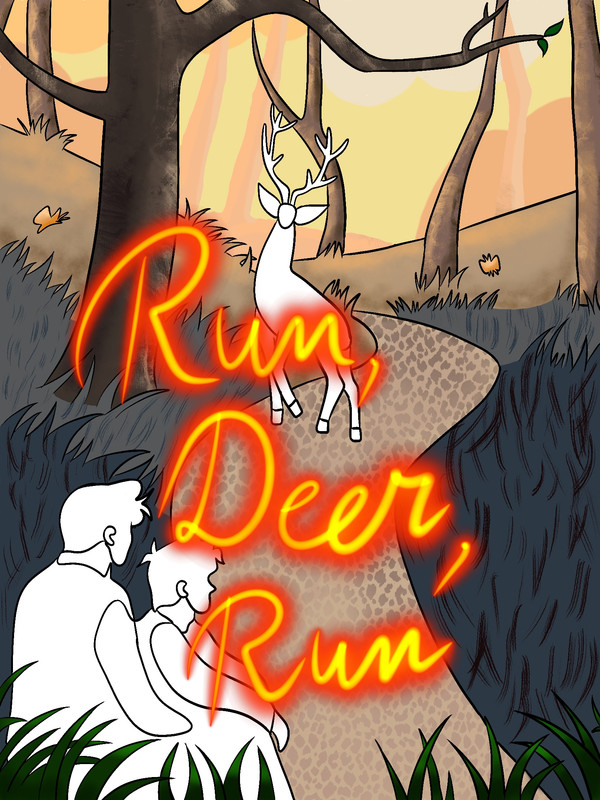
The radio had been left on by accident.
It murmured softly from the far corner of the room on Alastor’s sideboard. The sound threaded through the air like a nervous habit, something to fill silence so it wouldn’t ask questions.
Nights in New Orleans always held familiarity. Cicadas rasped under flickering streetlamps and laughter drifted up from somewhere below Rosie’s house and died just as quickly. This evening, a rainstorm had blown in, rattling the old house with its thunder, scrubbing the streets of dirt and harmony.
Alastor sat at the small writing desk by the window, back straight, Claire Morgan’s The Price of Salt open but unread beneath his hands. The window was cracked open just enough to invite the night in, and a few scattered raindrops that had wormed their way beneath the balcony’s roof laid still on the windowsill. Warm air slid across his neck, carrying the scent of magnolia and damp earth, and lifted a loose page before letting it fall again. A cigarette smoldered in the ashtray on the windowsill, forgotten. Its smoke curled lazily toward the ceiling. Even though Alastor was the one to always remind Husk of Rosie’s strict no smoking-in-the-house-rule, he himself sometimes couldn’t care less.
Vincent lay sprawled on the bed behind him, tie loosened after an exhausting day at work. One arm was thrown over his eyes as he listened to the voice crackling on the radio. He’d been there most of the evening, drifting in and out of conversations with Alastor, content in the way people were when they felt safe enough not to perform.
Neither of them spoke. It wasn’t an uncomfortable silence. They’ve been with each other long for that kind of quiet to settle naturally, like dust in sunlight. Alastor preferred it this way sometimes. Silence was clean. Silence behaved.
Vincent shifted on the mattress, making the springs creak softly. He let his arm fall away from his eyes and turned his head toward the window, squinting at the silver moonlight of night beyond it.
“The radio’s been acting up again,” he said idly. “Keeps losing station.”
Alastor hummed in acknowledgement, but didn’t turn around. Another pause. Alastor reached for the cigarette, took a drag, then grimaced at how far it had burned down.
“You hear about that thing up north?” Vincent asked, voice casual. “Little town near Shreveport.”
Alastor’s spine locked. It was subtle, anyone else might have missed the way his shoulders drew a fraction higher and his fingers stilled on the edge of the page, but Vincent immediately noticed. The radio seemed to hesitate, static sharpening just for a breath before smoothing out again.
“Belcher,” Vincent finished, slower now.
The name landed in the room like a dropped plate. However, it didn’t shatter. The sound it made was internal, like a dull, private crack. Outside, a roll of thunder boomed far in the distance, rolling in on the wind. Alastor closed the book carefully. The soft thump of the cover was far too loud in the quiet room.
“Is that so?” he asked lightly. “I don’t make a habit of keeping up with provincial gossip.”
Vincent didn’t answer right away. He watched Alastor’s reflection in the darkened window. His smile had, by now, lost all of its warmth.
“It was in the evening news,” Vincent said. “Something about a reopened inquiry. Old police conduct. Civil rights mess, I think. Just, the name of the city rang a bell.”
The room seemed to shrink. Humidity pressed closer, heavier now, clinging to Alastor’s skin. His pulse beat steadily in his ears and everything around him suddenly felt too loud and present. He could feel the phantom weight of red dust on his shoes, the remembered grit of a road he hadn’t walked in years.
He stood slowly. Every movement seemed like it might fracture something delicate and invisible between them. Vincent sat up on the bed.
“Al,” he said gently, “you alright?”
Alastor didn’t answer. Instead, he reached up and removed his reading glasses. It was a small ritual to him, precise and delicate, the kind that suggested that things would get serious. He folded them carefully, aligning the arms just so, and set them on the desk beside the closed book. Without them, his eyes looked sharper and darker, like polished wood before varnish.
For a moment, Alastor simply stood there, hands braced against the edge of the desk, head bowed as though in prayer. Vincent had the sudden, inexplicable sense that he was standing at the edge of something unstable, like the lip of a sinkhole disguised by grass.
“You’ve never told me the whole story,” Vincent said quietly.
“I haven’t told you many things,” Alastor replied.
His voice was still controlled, but something had shifted beneath it, a hairline of fracture running the cadence. Vincent exhaled slowly and swung his legs off the bed, planting his feet on the floor.
“I’m not prying,” he said. “You don’t owe me the full story. I just—when I heard the name, I thought—”
“You thought I might have an opinion,” Alastor finished. “How astute.”
Vincent winced. “You know that’s not what I meant.”
Another silence settled, this one heavier than the last. Downstairs, Anthony laughed too loud. Somewhere in the hallway, Niffty’s vacuum cleaner added a ridiculous undertone to the tension in the room. Beyond the window, the patter of the rain had gotten stronger. Alastor’s jaw tightened. He turned at last, facing Vincent fully. The lamplight caught his face at an angle that softened nothing. Instead, it etched the hollows beneath his cheekbones.
“You wish to hear about Belcher,” he said flatly.
Vincent hesitated, before he answered honestly, “I want to fully understand why that name feels like a knife to you.”
Alastor studied him with careful calculation. “I will tell you,“ he said finally.
Vincent’s breath caught. He hadn’t expected that. Before relief could settle in, however, Alastor lifted one finger.
“But,” he continued, “on one condition.”
Vincent nodded at once. “Anything.”
“I tell it once,” Alastor said. “From the beginning to the end. You do not interrupt. You do not ask questions. You do not attempt comfort, clarification, or commentary.” A faint, humorless smile touched his mouth. “You simply listen.”
Vincent swallowed. “Alright.”
“If you speak,” Alastor added softly, “I will stop.”
The seriousness in his tone erased any lingering doubt. Vincent nodded slowly again, and leaned back against the bedframe, feet coming to rest on Alastor’s mattress again.
“Once,” he repeated in agreement. “Uninterrupted.”
Alastor turned back toward the window. The radio crackled, threatening to break into music before dissolving again. The night pressed close, thick with memory. He could almost smell it—Red River water, damp leaves, cotton, corn and soil. He rested his palm against the window frame, fingers splayed with his eyes closed.
“When people speak of Belcher,” he began quietly, “they imagine fields and churches. Quiet roads. Good, honest folk.”
Vincent did not move.
“They imagine safety,” Alastor went on. “They imagine that nothing of consequence could ever happen in a place so small.”
His fingers curled against the wood.
“They are mistaken.” He opened his eyes again. “Belcher was small, yes, but that only meant that it was too small to forgive what it noticed.”
And then, the room was gone, replaced by red dirt roads and screaming cicadas and a boy who still believed that silence could keep him safe.
________________________
The kitchen smelled of starch and hot metal. It was a small room, narrower than it ought to have been for a house that presented itself so generously to the outside world. The walls were painted a pale cream that yellowed with age, and the single window over the sink faced east, letting the early light of the day bleed in low and red. Dust clung to the light like a second skin. Red dusk – carried in on shoes, on hems, on the cuffs of trousers – had settled into the corners of the room, staining the floorboards and threshold like an accusation.
Evangeline sat at the kitchen table with her sewing basket open beside her, a shirt spread carefully across her lap. It was Alastor’s. She had already mended the left cuff, the neat stitches almost invisible unless you knew where to look. Now she worked in a small tear near the shoulder seam, her fingers nimble and practiced despite the slight tremor that never quite left them. The needle flashed silver in the growing morning light, dipped, disappeared and emerged again. Her mouth moved as she sewed, whispering to herself in soft Cajun French.
“Dans le cœur, il y a de l'amour…” she lilted.
Alastor stood just inside the doorway, hands folded neatly behind his back. He had not been told to sit. He would not sit until he was told. Alastor’s back was straight, his shoulders squared. There was a faint tension in it that came from holding oneself too carefully for too long. Red dust clung to the cuffs of his dark trousers and to the soles of his shoes. He could feel it there, gritty and stubborn, even without looking. Evangeline glanced up at him and smiled.
It was a small smile, careful, as though she were afraid it might break him if she let it grow too wide. Her eyes softened immediately, the way they always did when they landed on her son. She took him in the way a seamstress might assess a delicate fabric, checking for frays, for stress points, for damage not yet visible.
“Bonjour, mon amour,” she said softly, “you’re up early.”
Alastor inclined his head. “Yes, Mama.”
His voice was calm, measured, the trace of accent ironed nearly flat by years of correction. Only the faintest echo of French rounded his vowels, a ghost of something he had learned to hide. She nodded and returned her attention to the shirt, her fingers resuming their steady rhythm. The needle slid through cloth with a soft, intimate sound, like a whisper meant only for those close enough to hear it.
“Assieds-toi,” she murmured. Sit down. A small command.
Alastor obeyed at once, moving to the chair opposite of hers and lowering himself into it with controlled grace, folding his hands into his lap. For a moment, there was only the hushed sounds of sewing and the distant call of cicadas beginning their morning chorus outside. The air was thick and warm, pressing on Alastor and his mother from all sides. A truck rumbled past their house, its engine low and heavy.
Evangeline’s murmuring continued, words slipping between French and English without clear distinction. She stitched and whispered and stitched again, as though each motion were tethered to the next by something deeper than habit. Alastor watched her hands. He had learned, over the years, to read his mother’s moods by the way she sewed. This morning, her stitches were tight but controlled. She was holding herself together. That, he knew, meant the day was going to be difficult.
“Do you want to eat breakfast?” she asked without looking up.
“No, Mama.”
She hummed, unconvinced but willing to accept the answer. After a moment, she reached for the iron resting on the sideboard, its metal base still warm from earlier use. She set it down beside her, as though preparing what would come next.
Suddenly, the door opened once more. The sound tore through the room like a sawblade wedged in deep wood. Evangeline’s shoulders jerked almost imperceptibly. The needle paused mid-stitch. Her whispered French died in her throat. Heavy footfalls echoed over the threshold to the kitchen, each sound made with purpose. Alastor felt the shift before he could see the figure behind it. The air itself seemed to brace, to draw inward as though preparing for impact.
Charles stepped into the kitchen. He filled the room without effort, his presence immediately commanding space. His suit jacket was draped neatly over one arm, the dark fabric immaculate despite the outside dust. His shirt was crisp, the tie perfectly knotted. Not a single strand of his grey hair was out of place. He surveyed the kitchen with assessing eyes.
“Alastor,” he said. It was a greeting, not an appraisal. Alastor rose his feet once.
“Yes, sir.”
“Stand properly.”
Alastor adjusted his posture by a fraction. He pulled his shoulders back and lifted his chin just enough to suggest confidence without arrogance. Charles’s gaze flicked over him, sharp and unyielding. It lingered on the dust at his cuff, the faint crease in his sleeve, the way his hands folded too neatly together.
“You’re late for breakfast,” Charles said.
“I was getting ready for school, sir.”
Charles made a sound low in his throat, something between disapproval and skepticism.
“Getting ready,” he repeated. “And yet you look like you’ve already spent the morning rooting around in a field.”
Alastor’s fingers tightened briefly before he forced them still. “I must not have noticed, sir.”
Charles straightened, irritation sharpening his posture. “Your mother clearly didn’t bother to look at you before letting you present yourself at the table like this. Typical. She’s forever letting small things slide and expecting the world not to notice.”
He reached and brushed at Alastor’s sleeve with unnecessary force, only smearing the dust further.
“Do you have any idea what people will think?” Charles said coldly. “The Henderson boy walks past in pressed trousers and polished shoes, and you—” His lip curled. “You look like a charity case.”
“I’m sorry sir,” Alastor said quietly.
“Sorry doesn’t fix appearances.” Charles’s eyes hardened. “You go out like this, and you shame the family. Every teacher, every student, will lay their eyes upon you and presume this is the standard we accept.”
He stepped back and folded his arms. “Clean yourself up before you leave. And if anyone asks why you were late, remember who you embarrass when you don’t keep yourself better.”
Alastor did not respond. He knew better. Charles’s eyes moved to the table and to the shirt in Evangeline’s hands. His jaw tightened.
“What is that?”
Evangeline flinched visibly now. She lowered the shirt slightly, fingers tightening around the fabric.
“I— Alastor tore it at school,” she said softly. “I was just fixing it.”
Charles stepped closer, his shadows stretching across the table. He took the shirt from her without asking, inspecting the repair with a critical eye.
“You should be more careful,” he said, his tone clipped. “These clothes cost money. Appearance matters.”
“Yes, dear,” Evangeline replied at once. The nickname held no fondness on her lips.
He turned his attention back to Alastor. “And your posture,” Charles continued. “You’re slouching.”
Alastor corrected himself again, the movement precise and immediate.
“And your voice,” Charles added. “You’re rounding your words.”
Alastor swallowed. “Yes, sir.”
“I’ve told you before,” Charles said, his voice tightening, “you must speak properly. People notice these things. They judge.”
“Yes, sir.”
Charles exhaled sharply through his nose, as though the very act of correcting his son were an inconvenience forced upon him.
“You will be attending church this weekend,” he said. “Both services.”
Alastor nodded. “Yes, sir.”
“It will do you good to remember where you come from,” Charles went on. “And what is expected of you.”
His gaze sharpened, drilling into Alastor with cold precision.
“I will not have this family become a source of gossip again,” he said. “Do you understand me?”
Alastor tried to hide the tremble in his hands by straightening them painfully. “Yes, sir.”
The words came out automatically now, a reflex trained by nearly seventeen years of practice. Alastor felt them leave his mouth without touching anything inside him. Charles seemed satisfied, at least for the moment. Then, he replaced the shirt to the table with unnecessary force and picked up his jacket.
“Dinner,” he said. “On time.”
Alastor nodded. “Yes, sir.”
Charles paused at the doorway, his hand resting on the frame. He didn’t turn around.
“And don’t make a habit of being late, especially when you trail after that boy from the cotton farmers,” he added coolly. “Once is carelessness. Twice is defiance.”
“I understand, sir,” Alastor mumbled quietly.
“You should,” Charles said. “I won’t make a habit of repeating myself.”
Then he turned and left the kitchen, his footsteps receding down the hall until he reached the front door. The kitchen remained very still. Evangeline did not move for several seconds. When she did, it was as though the strings holding her upright had been cut. Her shoulders sagged, her hands trembling as she gathered the shirt back into her lap.
She stared down at it, at the place she had just mended, and her breath hitched.
“Mon Dieu,” she whispered. Alastor watched her, his expression carefully neutral. He did not reach for her. He had learned to read her moods the way one reads the weather – by small, indirect signs. The tightening of her mouth meant caution. The softening of her voice meant regret. She, in turn, had learned not to ask questions whose answers might place them both in danger. Words were chosen carefully, shaped to mean less than they felt.
There was care between them, but it was disciplined, restrained by habit and fear. Whatever warmth they shared had been pressed flat over time, folded neatly away like a letter never meant to be opened. And so, Alastor remained still, hands at his sides, knowing that restraint was not just expected of him, but the only form of loyalty he was allowed to show.
Evangeline’s eyes shone, but she blinked rapidly, forcing the tears away. She resumed sewing with renewed urgency, her needle moving faster now, less steady. Her French returned in broken fragments, prayers stitched between apologies only she could hear.
After a moment, she finished the seam and tied it off with a small, decisive knot. She smoothed the fabric with her palm, as though hoping the gesture might erase more than just tear. Then, she rose from her chair and crossed the small space between them, holding the shirt out to Alastor. Her hands shook.
She pressed the folded shirt into his chest. Her fingers lingered there for just a second longer than necessary. Her eyes lifted to his, pleading, guilty, fiercely loving all at once.
“Je suis désolée,” she murmured. She was sorry. Alastor knew. He accepted the shirt without comment.
“It’s fine, Mama,” he said quietly. She nodded and the motion was unconvincing. She reached up and smoothed his brown hair. Her touch was feather-light, as though he might bruise beneath it.
“You are a good boy,” she whispered. The words settled over Alastor like a benediction and a warning all at once.
Alastor inclined his head and stepped back, folding the shirt carefully over his arm. He turned toward the doorway, his movements controlled. He stepped back from her, pausing at the threshold. Alastor straightened the shirt once more, and spoke softly, as though his voice knew its place.
“I should be going now,” he said. “I’ll be late for school.”
With that, he stepped out, leaving the shirt on the stairs before he closed the front behind him with deliberate care, and carried his silence with him into the morning.
________________________
The classroom smelled of chalk and old wood. It was a long, rectangular room with tall windows cracked open just enough to pretend the breeze still cared to visit. Heat lingered anyway, thick and stubborn, pressing against skin and cloth alike. The slow ceiling fan above clicked faintly with each rotation, stirring the air without truly cooling it. Chalk dusk hovered perpetually in the sunlight and moved like pale ghosts that refused to settle.
Alastor sat two rows from the back— exactly where he always sat— amongst the other colored students of the class. His desk was immaculate, despite its wear compared to those at the front occupied by the fairer students. His books were stacked neatly next to pencils aligned parallel to the edge. He had already copied the date and subject – Science – onto the top of the page in precise cursive. The loops of his handwriting were controlled and measured. His glasses rested low on his nose, catching the light when he tilted his head down to read. Behind him, the room buzzed with subdued disorder.
Chairs scraped softly against the wooden floor, the sound dulled by years of use. Paper rustled and a book thumped shut. To Alastor’s right, one chair sat conspicuously empty, its desk bare aside from a shallow groove carved by generations of restless hands. One chair further, sat Husk. The unkempt boy slouched into his seat with none of Alastor’s careful precision, dropping his worn books onto the desk in a loose stack that threatened to collapse if anyone looked at it too hard. His school shirt was rumpled, the sleeves unevenly rolled, and there were faint dark circles beneath his eyes that spoke of a night cut too short. He pulled a pencil from behind his ear, glanced at the board, and let out a low, tired breath.
“Mornin’,” Husk muttered, barely audible, already flipping open his notebook. Alastor didn’t look up. He didn’t respond aloud. He merely inclined his head a fraction, an acknowledgment so small it could easily have been missed. Husk didn’t take it personally. He knew better than to expect meaningful conversation this early. Mornings were for preparation, for order, for silence. Anything more would only earn him a sharp look and a clipped remark, and neither of them had the energy for that. So Husk settled in, tapping his pencil once against the desk before stilling it, while Alastor continued to read as if nothing else in the room existed.
In front of them, boys lounged half-sideway in their seats, chairs tipped back despite repeated warnings. A girl whispered to her friend. Their heads were close together, making their long black braids brush. Someone further back tapped a pencil against the desk in a lazy rhythm until the teacher shot him a warning look. Laughter sparked and died quickly, contained just enough to avoid punishment. In front of him, though, the picture was different. Blonde haired girls and well-kempt boys arranged themselves carefully at their nearly-new desks, making much quieter chatter and most already copying the writing on the board as Alastor had. A muscle in his jaw twitched. This was just one of the many consequences of not fitting into one box or the other.
At the very front of the room, Mr. Sullivan scribbled dates across the blackboard. The chalk squealed faintly as it moved. He paused every so often to dust his hands together, leaving white residue clinging to his sleeves.
“Eyes to the front,” he said, not turning around. “This will be on the exam.”
Alastor’s pen moved smoothly across the page. He didn’t look up when the classroom door creaked open. That sound alone was not unusual – students came late often enough – but something in the way the door opened drew attention regardless. It was slow and unhurried, different from what one would expect when coming late and fearing punishment; as though whoever stood on the other side didn’t feel particularly pressed by the rules that governed the rest of them. Mr. Sullivan turned, irritation already sharpening his features.
“Who has the audacity to enter my class late?” he snapped.
The boy in the doorway smiled at him mischievously. He was tall (though not imposingly so), slim, wiry, and restless with his abundant energy. His blond hair was styled into a loose pompadour that refused to stay perfectly in place, as though it had given up on the effort halfway through the morning. His shirt was white and crisp but worn open at the collar, sleeves rolled casually to his elbows. There was dust on his loafers and a faint smudge of grease on his knuckles, like he’d come straight from fixing something rather than sitting politely through roll call.
“Sorry, sir,” the boy said easily. “Got turned around.”
There was no shame in his tone or rush to justify himself. Just a grin stuck to his face that suggested he found the whole thing faintly amusing. Mr. Sullivan’s mouth tightened.
“And you are?” he asked.
“Lucien Devlin,” the boy replied. “Transferred in from St. Agnes.”
A murmur rippled through the classroom. St. Agnes was across town. A catholic school with stricter rules and whiter in reputation if not always in numbers. A few heads turned fully now, curiosity overtaking decorum. Someone whispered a name whereas someone else snorted softly as if already forming an opinion.
Alastor remained still at his desk. His eyes were lowered just enough to seem indifferent. He had learned the value of not being the first to look. But Lucien hadn’t. Alastor felt a brief, unwelcome tightening in his chest when the blonde boy’s gaze flickered over his face, then to his shoulders, and to the pencil resting in his slim fingers. Lucien’s bright blue eyes moved from Alastor to the room again, cataloguing faces and judgments, not settling anywhere longer for a second. Alastor wondered if the boy actually understood the rules of places like this. How to take up as little space as possible. How to wait.
When Lucien’s eyes finally passed over him again, Alastor didn’t keep his head down. Their gazes met for a fraction of a second – nothing that would draw notice – but something quiet passed between them. A shared awareness of scrutiny, of being measured before being known. Alastor’s breathing caught in his throat until Mr. Sullivan’s steady voice served as a reminder for him to fill his lungs with oxygen again.
“You’re late,” Mr. Sullivan said flatly, his gaze raking over Lucien from head to toe.
“Yes, sir.”
“And you’re interrupting my lesson.”
Lucien nodded. “Yes, sir.” His tone was serious in its acknowledgment. His grin, however, didn’t falter or fade. A few students from the rows in the back snickered, and Mr. Sullivan shot them a sharp look before turning his attention back to Lucien. He exhaled sharply through his nose.
“Take a seat,” he said. “And try not to make a habit of tardiness.”
Lucien tipped an imaginary hat. “Wouldn’t dream of it.”
That earned him another round of suppressed laughter, especially from the girls. Lucien didn’t linger at the front. Instead, he scanned the room with an easy confidence that immediately set Alastor on edge. His eyes were bright and his mouth curved like he expected the world to accommodate him. He moved down the aisle without hesitation, as though he already knew where he belonged.
The only empty seat left was between Alastor and Husk. Husk noticed it at the same moment Alastor did. He leaned back slightly in his chair, one brow lifting in faint disbelief, as Lucien dropped into the seat next to him without asking. No apology or inquiry, just a smooth settling-in, knees angled wide, one arm slung carelessly over the back of the chair. Alastor watched him unobtrusively; expression composed, thoughts anything but.
Of course, Alastor mused inwardly. Like he owns the place.
The atmosphere in the classroom seemed to shift uncomfortably, and Mr. Sullivan cleared his throat before speaking. “Mr. Devlin, a seat can easily be arranged for you at the front.”
Lucien’s grin widened, as if he could care less about how many rules he was breaking with his presence at the back; a drop of cream in a sea of hickory. “No thank you, sir. This seat was already empty.”
Mr. Sullivan considered arguing, but after a moment, a low hum emanated from his throat and he turned back to writing on the board. His lack of discipline towards Lucien led to the classroom population bordering on a riot. Practically every student was caught between staring incredulously at Lucien’s place in the class and whispering to their colleagues, surely wondering what they’d tell their parents about this when they got home. A black boy at the front of the class would have led to dismissal. But a white boy at the back? What were they to make of it?
Lucien seemed completely oblivious to the attention, exchanging a quick remark with Husk – some charming little comment that earned a glimpse of confusion from the boy. Lucien smiled as if it were the most natural thing in the world, as if he hadn’t crossed the invisible line without so much as glancing down as to not trip. Alastor felt a familiar, sour edge of judgment rise in him. He recognized the posture, the ease. He’d seen it before – boys who moved through the room expecting forgiveness, or none at all. Boys whose confidence was mistaken for charm, whose boldness was indulged rather than corrected.
White boy from across town, his mind supplied uncharitably. Transferred in, already certain the rules will bend.
Lucien leaned back, stretching his legs beneath the desk, utterly unbothered by the attention he’d drawn or the space he’d taken. Alastor did not look at Lucien. He did not acknowledge him in any way. His pen continued its steady movement across the page, though the line wavered almost imperceptibly for a moment before correcting himself. Lucien slouched in his chair. He glanced openly sideways now, taking in Alastor’s rigid posture, the crisp line of his shirt and the way his hands rested folded neatly when he paused his writing.
“Hey,” Lucien murmured under his breath. “You got a pen I can borrow?”
Alastor’s jaw tightened. He turned his head slowly, fixing Lucien with a cool, assessing look over the rim of his glasses. For a heartbeat, he considered pretending he hadn’t heard. Not only was the request a ludicrous one, he was almost certain that whatever pen he could supply would hardly be up to the standards of his class. Lucien met his eyes without flinching, the blue within his own bright with amusement. Alastor exhaled through his nose and reached into his satchel, withdrawing a single black pen. He held it out without a word. Lucien took it and their fingers brushed briefly.
“Thanks,” he said softly, a smirk tugging at the corner of his mouth. “I’ll try not to lose it.”
“Do,” Alastor replied dryly, mouth moving before his brain could stop the muscles.
Lucien’s eyebrows lifted in interest. “That a threat or encouragement?”
Alastor turned back to his work without answering. From the corner of his eye, he could see Lucien watching him, the faint grin still in place. The boy clicked the pen absentmindedly, then began scribbling onto his paper. His handwriting consisted of crooked, careless letters that bore no resemblance to Alastor’s immaculate notes. Alastor felt irritation coil tightly in his chest. He disliked disorder. He disliked people who treated rules like suggestions, who moved through the world as if everyone and everything would bow to them. He disliked the noise Lucien brought with him, the way his presence seemed to bend the room slightly off its axis.
And yet, he found himself acutely aware of Lucien’s proximity in ways that went beyond frustration. He noticed the faint scent of soap and tobacco that clung to Lucien’s clothes. The easy confidence with which he occupied space— the type that Alastor had learned, painstakingly, to minimize. It was foolish, careless. The sort of thing that got people into deeper trouble than they could clamber out of. Lucien was someone Alastor should dismiss entirely, lest poor words spread about him, too.
So, he kept his focus trained on Mr. Sullivan’s lesson.
The teacher launched into his lecture, voice droning as he traced numbers and scientific equations across the board. Cells. Systems. Cause and effect. The language of discovery layered carefully over rules and classifications – what could be observed, what could be measured, what was deemed worth studying.
Alastor took it all down dutifully, his pen gliding across the page. Definitions and neat labels were carefully aligned in the margins. He copied not just the words but the structure of them, the certainty with which they were presented. Facts, unlike people, were supposed to be consistent.
Still, as Mr. Sullivan spoke of order and natural laws, Alastor couldn’t help noticing the quiet contradictions – what was emphasized, what was passed over, which examples were treated as universal and which were not. He wrote anyway, knowing there was safety in mastery, in knowing material better than anyone could question.
Lucien, however, did not follow Alastor’s example. He wrote for a few minutes, then stopped. The pen clicked again. He leaned forward, squinting at the board, then back again. His chair thumped softly as it hit its legs.
“You always sit like that?” he whispered to Alastor inquisitively.
Alastor ignored him, but Lucien didn’t seem to care.
“Like you’re balancing a book on your spine?”
Alastor’s pen paused. He hadn’t intended to respond. Normally, he would have ignored the whispered comment from beside him. He had learned long ago that attention, even defensive attention, came at a cost. But something about Lucien’s tone, confident in the assumption that he would get away with it, struck a nerve already worn thin.
“It’s called posture,” Alastor snapped quietly. “You should try it sometime.”
The words were out before he could stop them. For a heartbeat, the world seemed to still. The scratch of chalk on the board continued, but Husk stilled two tables beside him, eyes flickering from Alastor to Lucien. Alastor felt heat rise under his collar. His jaw tightened as he forced his hand back into motion, pen resuming its steady path across the page as if nothing had happened. His reaction might have been fine with the rest of the student body nearby, but he’d forgotten a second too late that the boy beside him belonged at the front of the class, regardless of how he’d positioned himself. To position himself in such risk, towards a student of St. Agnes no less?
He refused to look at Lucien, hoping perhaps the ground beneath his desk would swallow him up before the boy raised his hand and reported his uncouth behavior to their teacher.
Lucien, however, did no such thing. Instead, he grinned even wider. “Might give it a go. Seems exhausting, though.”
Alastor, now both stressed and worn down to his very last nerve, shot him another sharp look. “Would you mind?”
Lucien held up his hands in mock surrender. “Alright, alright.”
Mr. Sullivan’s voice cut through Lucien’s low whisper. “Mr. Montgomery, Mr. Devlin.” Chalk paused mid-line as he turned, eyes narrowing just to single one of them out. “If you have something to share with the class, now would be the time.” A few heads turned. Lucien straightened, expression innocently attentive, but it was Alastor who felt the full weight of the stare settle on him.
“You, Mr. Montgomery,” Mr. Sullivan added, sharper now. “Since you seem determined to be a distraction, perhaps you’d like to stand. At the very back.”
It wasn’t a request, and Alastor knew as much.
The chair legs scraped loudly as Alastor obeyed. He kept his face composed, but something hot and corrosive flared in his chest. Lucien had spoken first. Lucien had pushed. And yet, it was Alastor who was removed, displayed and disciplined. It wasn’t new – he knew that pattern too well – but knowing didn’t dull the anger of it. The rules bent differently around boys like Lucien. Around boys who looked like they belonged, even in the places they didn’t. As he stood with his back an inch from the wall, spine rigid, jaw clenched, Alastor felt a familiar rage coil tight and silent inside him. Not just at the injustice of the moment, but at how easily it was accepted as natural.
After an agonizing fifteen minutes of humiliation, the school bell rang sharp and merciful, cutting Mr. Sullivan off mid-sentance. Chairs shifted as the class exhaled as one. A short break, just enough to reset the room.
“Mr. Montgomery,” Mr. Sullivan said without looking up from his notes. “You may sit. Manage your attention better, or you will be dismissed from my classroom.”
Alastor returned to his desk, face carefully blank. Husk was already standing, stretching with exaggerated casualness.
“Bathroom,” he muttered, jerking his thumb toward the door. “We’ll be catchin’ up later.” The statement slipped out easily as his friend returned to his seat. His dark eyes lingered on Alastor half a second longer than necessary, a silent you okay? that went unanswered before he slipped out of the room.
Alastor was almost certain that Husk would be heading anywhere but the bathroom.
That left Alastor alone with Lucien. Even given the opportunity to move to the front of the room where he belonged, he stayed put, much to Alastor’s dismay and to the curiosity of everyone else. The space beside him suddenly felt much vaster without Husk’s presence. Lucien leaned back in his chair, tipping it back onto two legs like he belonged nowhere else.
“You ain’t from around here,” he said again. It wasn’t accusing, more observing.
Alastor kept his eyes on his notebook as he sunk back into his chair. “Neither are you,” he replied flatly.
Lucien huffed a soft laugh. “Fair. But I mean—” He gestured vaguely, then seemed to think better of it. “You talk like you learned words from books, not people.”
Alastor’s grip tightened on his pen. He didn’t look up. He could feel the question circling, could already hear the versions of answers that would cost him something.
“I beg your pardon?” he said politely despite the rage flaring up in his chest.
Lucien shrugged. “Your accent. It slips.”
“It does not,” Alastor said coolly.
Lucien’s smile softened. It suddenly lost some of its teasing edge. “Did just now.”
“Does it matter?” Alastor shot back.
Lucien was quiet for a beat. When he spoke again, the edge of amusement was gone for good. “Just trying to figure you out.”
Alastor finally turned enough to meet his gaze. His expression was full of careful composure.
“You don’t need to,” he answered. “I am not here for that.”
Lucien studied him for a moment before lifting his hands again in that same, infuriating gesture of surrender.
“Alright,” he said. “Suit yourself.”
The bell rang again, signaling the end of the break. Husk still hadn’t returned. Mr. Sullivan cleared his throat at the front of the room.
Alastor faced forward, heart still tight. The rest of the class period passed in uneasy truth. Husk returned approximately ten minutes later, receiving a ruler across his knuckles for being late. Lucien behaved, more or less. He didn’t tip his chair again and kept his voice down. He even took notes, though they were scattered and inconsistent, dates crammed into margins, arrows pointing nowhere in particular. When the bell finally rang, the room was released from its collective restraint. Students surged toward the door in clumps, voices rising, laughter spilling free now that it was permitted.
Lucien stood, stretching his arms above his head without a care for who might be watching.
“Hey,” he said to Alastor, handing back the pen. “Appreciate the loan.”
Alastor took it. He inspected the pen briefly as though checking for damage.
“Try not to be late tomorrow. Mr. Sullivan has a long memory,” he forced himself to say. “And do try to bring your own pen.”
Lucien smirked. “Good to know. I’ll be remembering that.” He paused, then added more quietly. “See you arounddddd…?”
Alastor sighed, hearing the unspoken question and having no energy left to resist answering honestly. “Alastor.”
“Lucien,” the boy replied, tapping his own chest. “In case you missed it.”
As Lucien slipped away into the flow of students, Alastor watched him go with narrowed eyes. Careless. Foolish. Unrefined. He didn’t have other words to describe the new boy in class.
Husk snorted beside him. “Bold entrance for a new kid,” he muttered, stretching his arms as the last remaining students began to leave. “Guy walks in like he owns the joint.”
Alastor gathered his books carefully. “He doesn’t understand the rules,” he said. “Or he thinks they don’t apply to him.”
“Same thing, usually.” Husk glanced toward the door, then back to Alastor. “You alright? Sullivan was riding you harder than usual.”
Alastor’s jaw tightened. “I’m used to it.”
Husk grimaced. “Yeah, doesn’t make it right.” He hesitated, then added, “You didn’t do anything wrong.”
“I know,” Alastor said a little too quickly. He exhaled. “He provoked it.”
“And got off clean,” Husk finished. “Figures.”
They stood there a moment longer until Husk nudged Alastor lightly with his elbow.
“Just be careful with him,” he said. “A guy like that doesn’t hint at trouble. He’s built from it.”
Alastor’s gaze lingered on the doorway Lucien had vanished through. “I don’t intend to give him satisfaction.”
Husk huffed. “Good. Because I got a bad feeling he’s the type who enjoys getting under people’s skin.”
Alastor rubbed his fingers against the covers of his books. “Then he’ll find I don’t itch easily,” he said.
Husk smirked. “Could have fooled me.”
________________________
When he’d finally left the schoolhouse, Alastor followed the same route as he had every afternoon for years.
He walked from the high school through the narrow streets of Belcher, past red-dusted sidewalks and shuttered shops. Today, as the seasons crept towards change, the sun hung heavier in the sky, painting the rooftops in amber and gold, streaking the brick walls with long shadows. The air was warm but not oppressive, and for once, there had been no sharp words to reflect on in the classes that followed Mr. Sullivan’s, no reminders of the careful performance required to navigate the tiny, forcibly-mixed Belcher High.
Husk had left before the last bell, meaning Alastor had to walk the rest of the way home alone. His satchel rested comfortably against his shoulder. He noticed the scent of the earth warmed by the day’s sun, the faint tang of cotton from the nearby fields, and the distant bark of a dog somewhere down a back alley. It was ordinary. Safe, in the small, unspectacular way that Belcher allowed.
He walked down the long driveway that branched off of the main road and opened the front screen door of the Montgomery household with a quiet click. The air inside was immediately cooler, scented with familiar things: the faint fragrance of flowers his mother kept in jars on the window sill, the lingering warmth from cooking earlier meals, and the soft, comforting notes of their old piano emanating from the next room. He removed his satchel and set it aside, careful to align it with the edge of the small rug as he always did to keep it out of the way. Order, he reminded himself, made the world predictable.
Alastor paused in the doorway to the kitchen. The slight hum of music drew his attention. Two voices rose in gentle harmony, weaving through the air like sunlight caught in threads of silk. He recognized the words, soft and rolling in French, and the smile on his face was imperceptible, hidden beneath the practiced mask of civility he wore every day.
“Je ne sais pas si je l'aime,” Evangeline’s echoed through the house. Danielle Darrieux. One of Alastor’s mother’s favorites.
“Mais sitôt qu'il me dit chérie,” another voice, higher and brighter, joined her. It was unmistakably Rosie’s, his godmother. Playful and strong as always.
Alastor stepped quietly into the parlor. The afternoon light slanted through tall windows. Rosie sat at the piano bench, fingers hovering over the keys, posture straight yet relaxed. Evangeline perched on the edge of the bench beside her, a soft smile playing across her lips as she watched Rosie’s hands move.
When Alastor approached, they shifted slightly, making room for him to watch the sinking keys from behind without a word. The piano’s polished wood gleamed under the sunlight, and as the sunlight continued to trickle away, the last notes of the gentle melody settled into the air. Rosie’s fingers danced over the keys with precision, while Evangeline’s voice followed hers softly, filling in harmonies and catching subtle nuances. Their intertwined voices created a melody that made the room feel like a sanctuary. Once the last word had been sung, Rosie turned to Alastor with nothing but warmth and love in her eyes.
“Rosie,” Alastor said softly. Rosie immediately stood from the bench, hugging him tightly.
“Alastor!” she chirped warmly, her voice dancing with energy. “I thought I’d surprise you and your mother with a visit. Was I successful?”
“You were,” Alastor replied. The smile he allowed himself was small, a fraction of warmth in a day otherwise governed by restraint. “Its been a long time since your last visit.”
“Too long,” Rosie agreed with a dramatic sigh. “You know how life gets. Love, music, a love for music, and all that sinful indulgence of the soulful city. It wraps you up tight and never lets you go!”
Alastor hummed, but no comprehension of her plights graced his mind. Rosie seemed to understand immediately, her reactionary laugh light and airy.
Evangeline looked up from the piano at the two of them and smiled, though her expression was much more edged with caution than his own, as if every kindness had to be measured against the household’s rigid rules.
“She was telling me about her singing career,” she elaborated to Alastor. “She said it’s done well for her.”
“Better than well!” Rosie was quick to add. “I’m practically a sensation! The boys can’t get enough of me, and well, who would I be to fault them for it!” Her tone was chipper, but something akin to thrill flashed through her eyes as she finished her words— something Alastor must have only imagined, seeing as it disappeared just as quickly as it had made itself known.
“Your father will not be home this evening,” Evangeline said, voice soft, turning the conversation away from Rosie. “He had to go to Bossier City unexpectedly. Some business matters.”
Alastor froze, just slightly. His hands curled into fists. Inside, a flicker of relief washed through him. His father’s absence meant freedom— even if it was only a brief, careful, invisible freedom. Yet, he would never dare to show that easiness in his chest to his mother. He inclined his head politely, acknowledging the news with nothing more than a controlled inflection. “I see,” he said simply.
Rosie’s eyes sparkled as she clapped her hands lightly. “Good news, then, isn’t it!” she exclaimed, trying to ignore the tension in the room. “That means we can cook together. We could even sing a bit more without having to worry about the old man’s scolding.”
Alastor’s lips twitched faintly, but he returned to the stoicism of habit. Rosie’s gaze softened as she looked back to Evangeline, a thousand unspoken memories in the curve of her smile. They had grown up together, neighbors in the rolling countryside, two girls inseparable from the moment they could walk to the creek without their mothers watching, the best of friends despite their prominent differences. Summers had been filled with barefoot races along dusty paths, picking wildflowers, and late evenings spent teaching each other songs they made up, voices echoing out across the fields.
It had been Evangeline who had first shown Rosie how to thread a needle properly, who had steadied her when she fell from trees and ended up scraped. And it had been Rosie who had dragged Evangeline into muddy puddles, laughing until they couldn’t stand, breathless with mischief and freedom.
Their paths had diverged later. Evangeline married Charles and moved into the rigid household that suited him, while Rosie had taken the winding roads to New Orleans, chasing the music that lived in her throat and on her fingertips. But distance had never weakened their bond. Rosie returned every so often, drawn not just by friendship, but by duty and affection; for both Evangeline and for Alastor, her godchild, who had grown under their combined care into a boy of remarkable refinement and silent strength.
Charles, however— well, Rosie had never taken to him. Not his temper, not the cold and measured cruelty with which he reduced Evangeline to her heritage, and not the ease with which he reminded everyone of their rightful places. She stayed close because she cared for Evangeline, but most of all because she wanted to be a shield, however small, around Alastor— hoping to give him at least a few moments of peace and laughter whenever possible.
Rosie glanced at Alastor now, faint amusement in her eyes despite the memory and tension. “Now don’t think I won’t make you sing along this time, my dear. You know the words,” she teased lightly. “You’ll carry your part whether you like it or not.”
Alastor’s hand twitched a little. He said nothing, but the corner of his mouth betrayed him with the hint of a small, private smile he only allowed himself around Rosie.
The three of them moved to the kitchen. Alastor stood at the sink, sleeves rolled precisely to the same point on each forearm, washing vegetables one by one. He scrubbed celery stalks until they squeaked faintly beneath his fingers, rinsed bell peppers until the water ran clean, and lined everything up on a folded cloth to dry. He arranged the produce by size and purpose, already anticipating the moment each would be needed.
Rosie claimed the counter space beside him. The knife she wielded seemed like a natural extension of her hand. The blade gleamed as she chopped onions and peppers with speed, as if she had been born to prepare such ingredients. Every tiny piece of vegetable looked uniform. Each strike of metal against wood landed in time with her quiet humming of some jazzy New Orleans tune that carried heat, magnolia and late nights in crowded rooms. As the onions yielded, their sharp scent bloomed in the air, mingling with the sweetness of bell paper and deeper promise of spices yet to come.
At the stove, Evangeline worked on the roux. She stood close to the heat, one hand steady on the pot, the other moving a wooden spoon in slow, deliberate circles. Oil and flour blended well under her care, pale at first, then gradually deepening in both color and flavor. She, too, hummed softly along with Rosie. French words drifted in and out of the melody. The sound was gentle enough that it barely disturbed the simmering quiet of the room. Even on the evenings that Charles stood right behind her, breath tingling her neck, she never rushed the roux. It required patience, attention, and a willingness to stand in the heat and stir long past comfort. Alastor watched her from the corner of his eye and realized painfully that she had learned this patience young, just like him.
Rosie glanced over her shoulder. “You always make it so well, Ange,” she said lightly. Ange. Alastor rarely heard someone calling his mother by her nickname. His father would always call her by her full name or simply denote her to wife. Never in a lifetime would he use tender words or pet names to address his mother, as she did for him. “Just like in old times,” Rosie added.
Evangeline smiled without looking at Rosie. “I know,” she replied. “Gumbo is still my favorite to cook.”
“And my favorite to eat,” Rosie laughed. “Your oyster gumbo has to be the best I’ve tried, which just about makes it the best in the world.”
Alastor dried his hands and moved to measure more flour, spooning it carefully into a bowl. He leveled each scoop with the flat of a knife. He listened more than he spoke. That had always been his role, and it seldom changed with varying company. He adjusted the flame under the roux when Evangeline nodded for him to do so, then stepped aside again, hands folded loosely in front of his torso.
Rosie slid the chopped vegetables into separate bowls – the holy trinity kept reverently apart for now – and wiped her hands on a towel. “So,” she said with abundant casualness. “How are you holding up, Ange?”
Evangeline’s humming faltered just for beat. “I’m fine,” she answered. “Why wouldn’t I be?”
Rosie raised an unimpressed eyebrow. “Because you say that every time I ask.”
Alastor’s shoulders stiffened almost imperceptibly as he reached for the spice tin. Cayenne. Paprika. Thyme. Bay leaves. He measured carefully, breathing in the dry, earthy scents. His hands were steady, but something in chest tightened.
Evangeline kept stirring. The roux had reached a rich, coppery brown now, glossy and smooth. “You worry too much,” she said gently.
“And you lie too easily,” Rosie replied just as gently, but somewhat firmer, clearly not letting it go. She stepped closer to the stove, lowering her voice. “Ange.”
Evangeline sighed. The sound was barely audible over the low hiss of heat. “Rosette, please.”
Rosie’s gaze dropped— not to the pot, but to Evangeline’s arms as she shifted her grip on the spoon. The long puff sleeves of her green button-down dress slid back just enough. A bruise, yellowed at the edges, bloomed dark against her caramel skin. Another faint mark lingered higher up, partially hidden but unmistakable if you knew where to look. Rosie went very still.
“How long has this been going on?” she asked quietly. Evangeline froze. The spoon stopped moving, threatening to scorch the roux.
Alastor stepped forward automatically and took the spoon, stirring with the same careful motion as his mother. He said nothing, though his throat felt tight as though brambles had lodged themselves there and refused to move.
The knowledge of the bruises was nothing new to him. He himself carried them, after all. Sometimes, when punishing his wife wasn’t enough for his father, Alastor was the next in line. He always needed something – or someone – to let out the frustrations that came to him from being married to a Creole woman and having a mixed-raced son. The love he’d held for his wife had lasted just as long as the people of Belcher had turned a blind eye to it— that is to say, until their marriage became something known. Scorned from belonging where he always had and with no simple way out, Charles hardened into husk of his former self, obsessing over presentation and maintaining whatever little status he still had left.
Alastor was a failure in father’s eyes, a shame for the simple fact of his existence, and he was deeply aware of that. His father had no qualms against making it known to him that his birth was a mistake, one that only sank his father deeper into ridicule.
Alastor focused on the pot again. On not letting the roux burn. On the smell of flour and oil. On anything but the dull ache spreading through his ribs.
“It’s nothing,” Evangeline said at last. “I’m just clumsy.”
Rosie laughed once, sharp and humorless. “No, you’re not.”
Silence stretched between them, heavy as humidity before a storm. Rosie reached out and turned off the flame beneath the roux.
Carefully, she guided Evangeline toward a chair. “Sit,” she said. It wasn’t a request.
Evangeline obeyed, hands folded in her lap, eyes fixed on the table. Rosie crouched in front of her. Her voice was low but unwavering. Alastor watched them from the sink, trying to busy himself with washing dishes that were already clean.
“I don’t like him,” Rosie started. “I never have. And I won’t pretend not to see what he does to you. Or what he does to him.” Her eyes flickered briefly to Alastor, who was now back at the stove, stirring rhythmically even though the heat was gone. He felt the words land like blows he could not block. His gaze was fixed on the surface of the roux as it kept thickening and darkening. He told himself to breathe. To remain useful.
“I’m your friend,” Rosie said. “And I’m his godmother. I won’t stay quiet forever. Especially not with it getting worse.”
For a moment, it seemed Evangeline might cry. Then she stood up again and straightened her dress. “Let’s finish the gumbo,” she redirected. “It won’t cook itself.”
Rosie searched her face, hoping her words had sunk deeper in, but found nothing. So, with a small sigh, she nodded, rising slowly. “Alright,” she replied. “But we will talk more about this later.”
Gradually, they each returned to their tasks, a new and uncomfortable stillness unshaken from the air around them. Rosie added the vegetables to the pot. The onions sizzled as they met the roux first, releasing a deep, savory aroma that filled the kitchen. Celery followed, then bell peppers. Their colors melted into one another as she stirred. The garlic went in last, just long enough to bloom without burning. Alastor passed her the spices one by one. She sprinkled them in, tasting, adjusting while her expression remained thoughtful. Stock was poured slowly, causing the mixture to shift into a thick, fragrant base. Bay leaves floated on the surface like small green boats. Alastor wondered passively if their sailors knew their sea was nothing more than a meal.
Evangeline shelled the oysters with careful hands. She worked slowly, wincing once when the knife slipped, though it didn’t cut. Alastor noticed. He always noticed. He took the oysters from her when she was done, adding them carefully to the pot, watching as they curled and turned opaque in the simmering broth.
They stirred, tasted, adjusted. Okra went in, sliced thin, lending its subtle thickness. The gumbo simmered as its steam rose in slow curls that fogged the windows and softened the room. As the minutes passed, the tension slowly folded into the background, like bruises hidden beneath fabric. They spoke of small things. Rosie’s latest songs. A neighbor’s new baby. The weather. Alastor said little, but when he did, his voice was steady and precise. He set the table, laid out bowls and spoons, arranged everything just so.
Within him, something ached. A persistent sorrow that he had learned to carry without showing. He loved them both fiercely, Rosie and his mother. He wished, foolishly, that love could be louder. Protective. Enough.
He knew that it wasn’t.
When the gumbo was finally ready, Rosie ladled it into each of their bowls. The oysters were plump and tender, the broth glossy and fragrant. They sat together at the table, steam rising between them. For a few minutes, there was only the soft clink of spoons against porcelain and the faint creak of the table as Rosie shifted in her chair.
“Well,” Rosie said at last, breaking the silence with her playful cheer, “if this doesn’t scare the spirits out of the floorboards, nothing will.”
Evangeline smiled faintly as she took her first spoonful. Her dark eyes looked tired. “It’s good,” she said. “You always insist it won’t turn out right unless you supervise.”
Alastor listened. He savored the warmth of the food more than the flavor. The gumbo was excellent – deep, layered, comforting – but it was the normality of the moment that held him. For once, there was no need to sit straight, no need to wait with eating until his father had finished and left the table, no fear of being scolded because his tie was slightly crooked. Rosie leaned back in her chair as Evangeline relaxed just enough to let her shoulders drop. The peace felt borrowed, like something they were allowed to hold only briefly.
Rosie glanced at Alastor. “You’re quiet tonight, darling. Even more than usual.”
“I’m listening,” Alastor said. It was only partly a lie, because he was indeed listening. He always was.
Rosie leaned forward again, balancing her spoon against the rim of her bowl. “Well maybe I want to take a turn at that,” she said lightly, “How was school today, pumpkin?”
Alastor blinked, caught off-guard. No one ever asked him that. Not without an edge, or an expectation of trouble. Something he could be punished for. He hesitated and straightened slightly.
“It was fine,” he said at first, out of habit.
Rosie gave him a look. “That’s not an answer. That’s a shield.”
Evangeline said nothing but watched them closely. Alastor exhaled through his nose.
“There’s a new student,” he said at last. “Transferred in.”
“Oh?” Rosie prompted, genuine interest in her voice.
“He sits near me,” Alastor continued. “Talks a lot.”
Rosie chuckled. “That doesn’t sound criminal.”
“It is when you’re not supposed to be noticed,” Alastor replied quietly.
Evangeline’s spoon paused halfway to her mouth.
“He spoke to you?” she asked carefully.
“Yes,” Alastor said. He hesitated before adding, “Openly.”
Rosie tilted her head. Her interest was sharp by now. “And?”
“He’s white,” Alastor said simply. “From across town. Catholic school. He sat right next to me, and he didn’t seem to care who was watching.”
Evangeline stared at him now, fear and surprise breaking through her composure. “In class?” she asked. “In front of the teacher?”
Rosie let out a slow whistle. “Well,” she said after a moment, “I don’t know whether to call that brave or headstrong.”
“Or sheltered,” Alastor added, gaze fixed on his bowl.
Evangeline reached across the table without hesitation braiding into the movement. She rested her hand briefly over Alastor’s. “You didn’t do anything wrong,” she said softly.
“I know,” he answered. And this time, he meant it, though knowing still didn’t feel like safety.
Rosie watched him for a long moment, something thoughtful and sharp behind her eyes. “Did he bother you?”
“No,” Alastor said. Then, after a pause, “Not exactly.”
Rosie smiled faintly. “Then we’ll just have to see what kind of a boy he is tomorrow.”
They finished eating in a companionable quiet. Rosie insisted on clearing the table – “Guests don’t wash dishes,” she declared, despite Evangeline’s protests – but Alastor rose anyway, collecting everyone’s bowls. Together, the three of them moved back into the kitchen. Alastor discarded any leftovers in their bowls, rinsing them off and stacking them neatly by size. Evangeline washed the rest of the dishes, sleeves rolled up, freeing the bruises again. Rosie didn’t mention them this time. She simply dried what Evangeline cleaned, holding the towel with care before hanging it to dry.
Rosie broke the hush in the room again, gentler this time. “You’ve got flour on your sleeve, Ange.”
Evangeline glanced down, surprised, then smiled. “So I do.”
Rosie reached out and brushed it away with her thumb. The gesture was intimate, unthinking. Evangeline froze in place, eyes narrowing. Gently, she stepped back. “I think I’ll take a quick bath,” she said. “Wash the day off.”
“That’s a good idea,” Rosie nodded. Her tone was light. “I’ll put the kettle on after.”
Evangeline hummed, touching Alastor’s shoulder briefly as she passed him. “Don’t stay up too late,” she murmured.
“I won’t,” he said, though neither of them believed it. Her footsteps faded down the hall, leaving the kitchen quieter. Rosie placed the last dish in the cupboard with a soft clatter. For a moment, she simply stood there, hands resting on the counter, staring at nothing in particular.
“Come on,” she said finally. “Let’s sit somewhere that isn’t pretending to be cheerful.”
They moved into the parlor, the room dimmer and calmer. The remnants of the evening light faded from the curtains. Heavy drapes framed the tall windows, their fabric worn smooth in all the places where hands had drawn them closed night after night. The scent of polish lingered faintly, layered over the deeper, more permanent smell of wood and age.
The furniture was arranged with rigid symmetry. Two armchairs flanked the fireplace, the sofa aligned precisely with the rug beneath it, every table and lamp placed as if deviation would be reprimanded. The rug itself was dark and intricate; its pattern faded by years of careful footsteps, the edges curling slightly despite repeated attempts to keep them flat. A low table sat between the chairs, its surface bare save for a single ashtray and a stack of neatly squared papers no one ever touched.
Along the walls hung framed prints of hunting scenes, depictions of dominance over land and animals alike. Above the mantel, mounted high and unavoidable, were deer skulls. Cleaned, bleached, polished to a dull ivory sheen— their antlers spread wide like crowns. Charles had collected them over the years, trophies from long weekends spent hunting far from home. Each skull was labeled discreetly with a small brass plaque, noting the year, the location, the weight, as if the animal’s death were a record worth preserving. Alastor’s gaze flickered to them out of habit, then away again. The hollow sockets seemed to watch the room, silent witnesses to a particular kind of power.
Rosie sank into the armchair with a sigh, kicking off her burgundy pumps. Alastor took his usual place on the edge of the sofa. He crossed his legs and rested his folded hands in his lap. Rosie studied him openly now. No humor was left to soften her gaze.
“You know I see it,” she said.
Alastor didn’t need to ask what she meant. Rosie did not withdraw her gaze when the silence stretched. She let it exist, let it settle, until it felt less like pressure and more like space.
“You see it too, don’t you?” she asked quietly. “The way he moves through the house. The way everything tightens when he’s near.”
Alastor’s throat went dry. He nodded once.
“He never raises his voice,” Rosie continued. “That’s what people miss. They think cruelty has to be loud to count.”
Alastor’s fingers curled slightly into the fabric of his trousers. “Loud leaves marks,” he said. “Quiet doesn’t.”
Rosie exhaled through her nose. “God, you sound older than you should.”
He gave a faint, humorless smile. “I’ve had practice.”
Rosie leaned back in her chair, one ankle crossed over the other, but her body remained angled toward her godchild. “Does he hurt you?”
Alastor hesitated. The instinct to deflect rose automatically, well-worn and efficient. He opened his mouth, closed it again.
“Not in ways that last longer than a week,” he said finally. “Not often.”
Rosie’s jaw tightened. The muscles beneath her cheek jumped once. “And your mother?”
Alastor looked toward the hallway, as if he might see his mother standing there. “He says she’s careless,” he said. “That she provokes him. That she should know better by now.”
Rosie’s hand clenched on the armrest. “What does he say to you?”
“He says I should be grateful,” Alastor replied. His voice was even, but something thin ran through it, like a wire pulled too tight. “He also says that he tolerates me, and that I embarrass him when I forget myself.”
Rosie swore softly under her breath. Neither of them spoke for a moment. The bathwater upstairs sloshed faintly.
“Listen to me,” Rosie said, leaning forward again. “I want you to know something. If you ever need to leave – if either of you does – you can come to me.”
Alastor stiffened. “Rosie—”
“I mean it,” she interrupted. “No explanations required. No conditions. I’ve got space. I’ve always got space.”
He shook his head automatically. “We can’t.”
“Yes, you can.”
“He’d—” Alastor stopped himself. He pressed his lips together, then tried again. “He’d find us. He’d never let her go. He’d be the ridicule of Belcher all over again, the man that couldn’t even keep a Black woman.”
Rosie’s eyes softened, but her voice did not waver. “I’d make sure he would never see either of you again.”
He let out a short breath, almost a laugh. “You make it sound easy.”
“I make it sound possible,” she corrected. “That’s different.”
Alastor looked down at his hands. They were steady. They always were. “It would ruin her,” he said. “Leaving. The shame. The talk. For some unexplainable reason, she still loves him.”
Rosie’s expression sharpened again. “Staying is already ruining her.”
The words landed hard. Alastor flinched not because of their cruelty, but because of the truth behind them.
“She still hopes,” he said quietly. “That he’ll soften. That if she’s patient and obedient enough—”
Rosie shook her head. “The right kind of hope doesn’t bruise your arms, Alastor.”
Silence again, heavier now. Alastor felt an ache in his chest, like a door pressed open for the first time in years. “I don’t know how to be anywhere else,” he admitted. The words surprised him as much as they seemed to satisfy Rosie. “I know how to be careful. I know how to stay out of the way. I don’t know how to… leave.”
Rosie reached out to him, placing her hand fully over his, thumb warm against Alastor’s darker skin. “That doesn’t mean you can’t learn.”
He swallowed. “What if she won’t go?”
“Then we wait,” Rosie said. “And we watch. And we keep the door open.”
He nodded slowly. “You promise?”
“I swear it,” she said. “On every stage I’ve ever stood on. On every song I’ve ever sung.”
That earned Rosie a small, broken sound from Alastor. It was something between a laugh and a breath he hadn’t realized he had been holding.
“I don’t want her to think I’m weak,” he said.
Rosie smiled sadly. “Wanting safety isn't a weakness. It’s survival.”
They sat there with their hands joined as the house settled deeper into the evening around them. Somewhere upstairs, the water stopped running. A door opened. Closed.
Alastor straightened slightly. The composure slid back into place. The ache in his chest remained, but beneath it was something else. A quiet, impossible feeling. Possibility. Hope of his own, even if only a glimmer. Rosie squeezed his hand once more.
“You will be okay,” she whispered into his ear, and for just a moment, Alastor indulged in a dangerous thing.
He allowed himself to believe it.