Chapter Text
Berry-Wood Tree
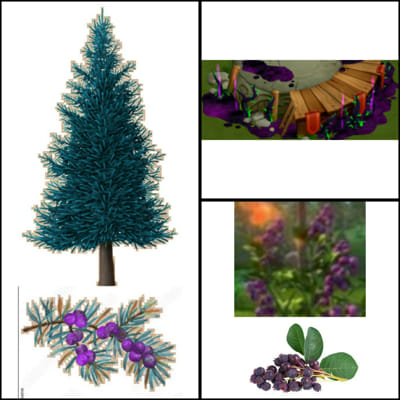
The Berry-wood tree is a coniferous tree with branches and bark that have a deep chocolate brown color. Its needles are a distinctive blue-green shade, and its cones are unique with unusually fleshy and merged scales, giving them a berry-like appearance, which are purple in color. The cones are edible and serve as foot for wildlife.
This tree is typically found "deep within the forest," indicating its ability to thrive in low-light conditions. It's relatively small in size and prefers shaded forest environments.
One of the notable features of the Berry-wood tree is its wood, which is prized for its suitability as a durable building material and ease of harvest due to It's small size and pliable wood.
Furthermore, the tree emits a fragrant scent from its bark, resembling the aroma of berries. This scent becomes more pronounced when the bark is cut, making it particularly attractive to fireworm dragons. These dragons are drawn to the scent, and the heat generated by their bodies and the fires they accidentally create causes the cones of the Berry-wood tree to open up, dispersing its seeds as a result. This unique interaction plays a crucial role in the tree's reproductive cycle within its forest habitat.
Dragonberry
The Dragonberry, a humble yet fascinating plant, stands out with its distinctive features. With its simple black appearance adorned by numerous little green spikes and the absence of traditional flowers, the Dragonberry plant has its own unique charm. The most enchanting aspect of the Dragonberry plant is the production of vibrant purple berries.The juice extracted from Dragonberries mirrors the berry's purple hue.
Threadtail dragons find solace in Dragonberry bushes. Due to their allergy to their own poisonous skin secretions, Threadtail dragons ingeniously trail through Dragonberry bushes. The bushes, adorned with their thorny spikes, provide relief from the incessant itching, with the juice of the berries also provideding a soothing balm.
Dragonberries are used in the creation of a calming extract, a precious elixir known to soothe the anxieties and discomforts of young dragons.
Rumblehorn dragons and Brooding Boltstamper dragons possess an inability to detect the scent of Dragonberries.
While Dragonberries are edible to dragons, they are not edible to humans, but in fact poisonous if ingested. They pose no theat to humans as long as they are not ingested, the berries and the juice being safe to handle.
Scag Berry
Scag Berries are closely related to Juneberries, both belonging to the Amelanchier genus. While Juneberries are more located in America, Scag Berries are located in Scandinavia and Europe.
Scag Berries grow on small bushes, that have small white flowers in the spring. The berries bloom in the summer, and are purple in color. They are small, sweet, and succulent berries. These berries often resemble blueberries.
These berries are renowned for their adaptability to different environments. They are particularly cold-hardy, thriving in regions with harsh winters. As a result, they are favored by gardeners and horticulturists looking to enhance their landscapes with hardy, ornamental shrubs.
Scag Berries, with their sweet and slightly nutty flavor, are versatile in the culinary world.
The simplest way to enjoy scag berries is by eating them fresh, right off the plant. They make a delicious and nutritious snack. Rinse them and enjoy the sweet, slightly tart taste.
Scag berries are a popular choice for desserts. They can be used in pies, tarts, cobblers, crisps, and crumbles. When cooked, they release their juices and create a sweet, fruity filling. Combine them with sugar, spices, and a flaky pastry for delectable pies.
The high pectin content in Scag berries makes them perfect for making jams, jellies, and preserves. You can enjoy the sweet flavor of scag pberries year-round by preserving them in jars.
Incorporate scag berries into muffins, scones, bread, and pancakes. They add a burst of sweetness and a pleasant texture to baked goods.
Scag berries can be used to make homemade ice cream or sorbet. The berries can be blended and incorporated into the mixture before freezing, creating a delightful and refreshing treat.
Fresh or frozen Scag berries can be added to smoothies for a burst of natural sweetness. They pair well with yogurt, milk, and other fruits for a healthy and delicious beverage.
Scag berries are used in winemaking to produce flavorful wines and liqueurs. They contribute a unique taste and aroma to these alcoholic beverages.
Scag berry sauce can be used as a condiment for savory dishes. It pairs nicely with meats, particularly game meats like venison or duck.
You can toss fresh Scag berries into salads for a delightful contrast in flavor. They work well in both green salads and fruit salads.
After drying, Scag berries can be enjoyed as a healthy, naturally sweet snack, similar to raisins or cranberries.
Muddle Scag berries to create a fresh fruit base for cocktails. They can be used in various mixed drinks, adding a unique twist to your beverages.
Scag berries can be used to make a fruity, caffeine-free herbal tea. They can be infused into hot water, making a delightful and refreshing drink.
Here's a summary of their nutritional value:
Rich in Antioxidants: Scag Berries are packed with antioxidants, particularly anthocyanins and quercetin. These compounds help protect your cells from damage caused by harmful free radicals.
Vitamins and Minerals: Scag Berries provide essential vitamins such as vitamin C, which supports your immune system and promotes healthy skin, and vitamin K, which is important for blood clotting. They are also a good source of minerals like manganese, which is crucial for bone health and metabolism.
Dietary Fiber: These berries are high in dietary fiber, which aids digestion and helps maintain healthy cholesterol levels. Fiber also keeps you feeling full, making Scag berries a great addition to a balanced diet.
Low in Calories: Scag berries are relatively low in calories, making them a nutritious, guilt-free snack or addition to your meals.
Healthy Carbohydrates: They provide carbohydrates that are slow to digest, helping regulate blood sugar levels and providing a steady source of energy.
Protein: While they are not a significant source of protein, Scag berries still contribute a small amount to your daily protein intake.
Heart Health: The antioxidants and fiber in Scag berries are beneficial for heart health. They can help reduce the risk of heart disease and lower blood pressure.
Bone Health: The manganese content in Scag berries plays a role in maintaining healthy bones and may contribute to bone density.
Anti-Inflammatory: The antioxidants and anti-inflammatory properties in Scag berries can help reduce inflammation in the body, which is associated with various chronic diseases.
Low in Fat: Scag berries are naturally low in fat, making them a heart-healthy choice.
Vitamin E: While not exceptionally high, Scag berries contain some vitamin E, which has antioxidant properties and supports skin health.